
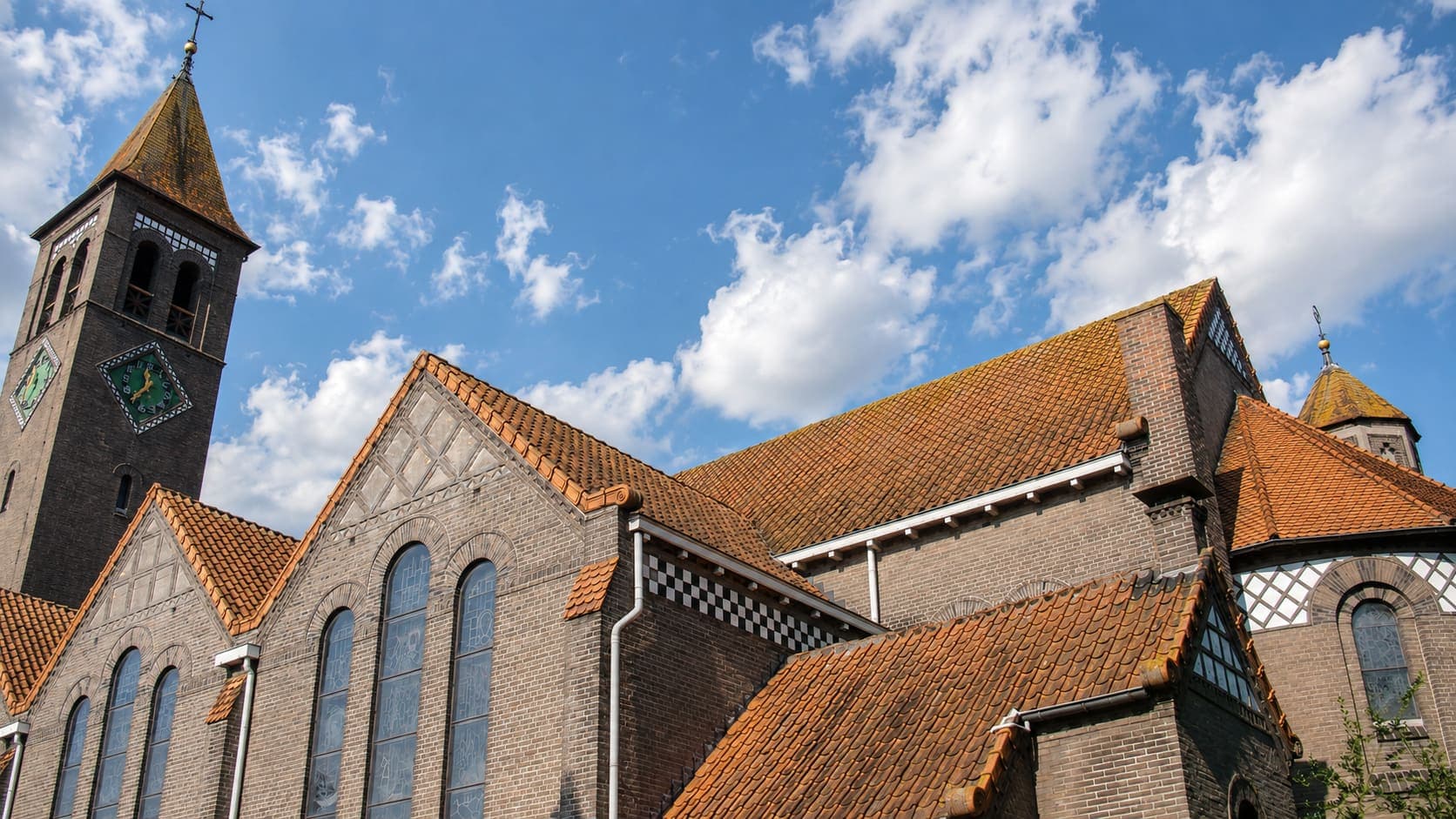
Utrecht · approx. 15 km from Utrecht
Sealant work in Harmelen
Harmelen lies in the peat meadow area along the Oude Rijn. The ground compacts and sinks, year after year, and not everywhere at the same rate. For sealant work that is the decisive factor here: how much a building moves determines how wide a joint needs to be, and on peat that is almost always more than on sand.
Since 1959
Experience and craftsmanship from Utrecht
Clear communication
Short lines, clear agreements
100% satisfaction
We only leave once you are satisfied
Lasting quality
Top-quality materials for a long-lasting result
What matters in Harmelen
Peat under the whole village
A village centre with older buildings, post-war residential neighbourhoods of terraced housing, and countryside with farms and outbuildings on peat meadow.
In the village centre there are buildings of varying age with timber window frames and older glazing; anything dating from before 1994 is suspected of containing asbestos until testing shows otherwise. The post-war residential neighbourhoods were put up in rows, with identical window frames and identical original sealant for each construction phase, and that sealant is now well past its service life. In the countryside there are farms and outbuildings on peat meadow ground, where the settlement is most noticeable and where you come across brick, timber, concrete and profiled steel cladding side by side within a single farmyard.
What makes Harmelen different from a village on higher ground is that the ground itself is moving here, and you can see that in the buildings. A joint that has split down the middle points to more movement than it could follow; a joint that has come away cleanly from one flank points more to an adhesion problem. That distinction determines whether we only replace or also adjust the width, and we check that for each facade.
In the village centre and the residential neighbourhoods parking is no problem and we usually park right outside the door. In the countryside the access route is the thing to watch: narrow causeways, unpaved farmyards that turn soft after rain and low passageways are awkward with a fully loaded van. We ask about that in advance, because getting stuck in a farmyard costs everyone a day.
Fifteen kilometres from our base, twenty minutes' drive. Close enough to come for smaller jobs too; the call-out charge stays limited. We like to combine Harmelen with Woerden, Vleuten or Kockengen on a single day, because they lie on the same route and one trip then serves several addresses.
What we do in Harmelen
- Bathroom, sanitary & kitchenSealing of sanitary ware, showers, baths, washbasins and kitchens.
- Window frames & glazingNeat, durable sealant work around window frames and glass.
- Facades & structural jointsFacade joints, connection joints and expansion joints in floors and walls.
- Swimming pool & wellnessSealant work in swimming pools, saunas, steam rooms and spas.
- Renovation & maintenanceSealant work during renovation, repairs and periodic maintenance.
- Specialist sealant workFor specific requirements and specialist applications.
You will hear from us within 15 minutes on working days, and the work comes with a 2-year guarantee.
The work here
What we do most often in Harmelen
Joint width on peat
With uneven settlement a building slowly deforms and that shows up at the junctions. During the site survey we measure how much movement is to be expected and derive the joint width from that. A wider joint stretches over more millimetres than a tight one. What sealant does not do is hold a structure back: it follows it.
More about this serviceWindow frames in the residential neighbourhoods
The post-war terraced houses often still carry the connection joint from when they were built. It has hardened and come away on one side, so water gets in behind the window frame, cannot get out again and attacks the timber. We take it out, take the flanks back to sound substrate and put in the right width.
More about this serviceFarmyards in the countryside
On a farmyard the house, barn and shed each stand with their own substrate: brick, concrete, timber and profiled steel cladding. They move differently and each calls for its own product and sometimes a greater joint width. Taking everything in one visit is considerably cheaper than three separate appointments.
More about this serviceHow we approach it here
Which sealant on what, and what it costs
The substrate decides the sealant
The flanks vary here, and on top of that the ground adds a further requirement. In the residential neighbourhoods you come across painted timber and post-war brickwork: on painted timber the sealant adheres to the paint layer, so if that is loose the joint comes off with it; brickwork from that period is hard enough to do without a primer, provided the cut face is clean. In the village centre the brickwork is older and more porous and, without pre-treatment, it draws the binder out of the sealant. In the countryside coated steel, concrete and untreated timber come into it too, each with its own requirements. And because the ground is moving everywhere, for exterior work we consistently choose elasticity over hardness: a rigid product lasts less long on peat.
Costs and lead time
What you pay is made up of metres, accessibility and removing what is there. In the residential neighbourhoods that is easy to predict because the houses are identical, and the price per address goes down as soon as several neighbours join in. In the countryside it depends more on the number of buildings and the number of different substrates, because each product calls for its own preparation. For buildings dating from before 1994, asbestos testing comes before the quote. A bathroom as a rule takes us half a working day. The curing time is separate from the working time and you get it with the schedule.
Two routes
Business or homeowner in Harmelen
For agricultural clients it is about long runs on steel, concrete and timber, which suit a fixed price per metre, and where the question of whether the farmyard can bear the equipment determines the lead time. For property managers and contractors in the residential neighbourhoods it is about complexes of identical houses on ground that moves; there the joint width should follow from the measured movement and not from what was there. Handover per building or per address, recorded in images.
For businesses
Contractors, painters, homeowners' associations, property managers and interior fit-out.
See what we do for businessesQuestions from Harmelen
What people in Harmelen ask most often
My joint has split down the middle. What does that tell me?
Usually that there was more movement than the joint could follow. A sealant joint can stretch by a percentage of its own width; if the movement is greater, it splits in the middle. That is a different story from a joint that has come away cleanly from one flank, which points more to an adhesion problem. The distinction determines whether we only replace or also adjust the width. On peat the first is no exception.
Does my house sink with the ground or does it stay put?
That depends on the foundations. If your house stands on piles down into the sand layer, the house stays put while the ground around it sinks; you can see that in a garden or pavement that drops away from the facade. If it stands on shallow foundations, the whole thing sinks with the ground, and rarely at the same rate everywhere. Both show up in the joints, but in a different way and with a different consequence for the width we use.
Can you do the house and the barn in one go?
Gladly, and it makes a considerable difference. Travelling out, unpacking and clearing up is the fixed part of every job; you pay for that once instead of per building. We do go through everything at the site survey, including what you might not see as sealant work yourself: a junction at a corrugated sheet or a plinth does count, and is often forgotten until water gets in. Let us know too whether the van can get onto the farmyard.
Does sealant behave differently in frost?
Yes, in two ways. Most types of sealant need a minimum temperature to cure properly; below that it takes longer or never reaches full strength. And sealant does not adhere to a frozen or wet substrate, however clean the flank is otherwise. In frost or persistent rain we would therefore rather move a day than deliver work that will not hold. Interior work can be done all year round.
How often does facade sealant work need replacing?
That differs from facade to facade, which is why we do not give a fixed number of years for a whole house. A joint facing south makes the biggest expansion and contraction movement every day and lasts less long; the same joint facing north hardly moves at all. On moving ground, ground movement is added to that. At a site survey we say for each facade what we expect, so that you can plan maintenance instead of being caught out by it.

