
Renovation and maintenance
Replacing and maintaining sealant work
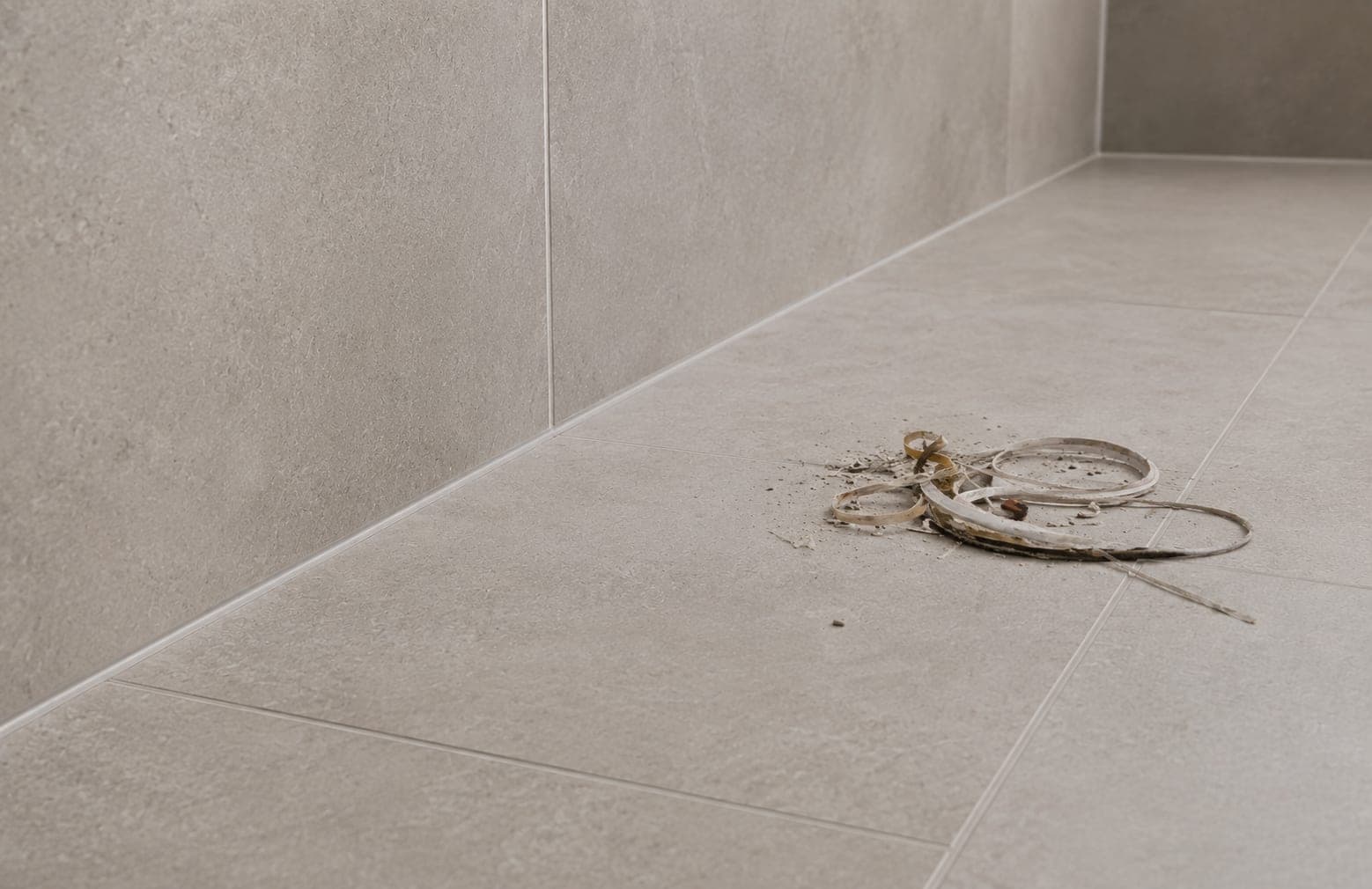
Old sealant out, substrate clean and dry, new joint in. With replacement the work is in the removal, not in the application. For homes, homeowners' associations (VvE) and planned maintenance.
Since 1959
Experience and craftsmanship from Utrecht
Clear communication
Short lines, clear agreements
100% satisfaction
We only leave once you are satisfied
Lasting quality
Top-quality materials for a long-lasting result
The core
Sealant does not bond to sealant
That is the whole reason why replacing is more work than applying sealant to new work. A fresh layer over an old joint bonds to that old layer, and in time that layer comes away, with the new sealant attached to it. You then lose time and material on a joint that lasts no longer than the old one.
So the old sealant has to come out completely, right down to the flanks. After that the substrate has to be clean, dry and free of grease, and where the material calls for it a primer goes on. Only then does new sealant go in.
In a bathroom that has been renovated before, that cutting out takes extra time: there is often residual material left in the joint and the tile edge has already been broken open once. That is not a side issue, because it determines the price more than the number of metres does.
When it is time
Four signs that sealant work is worn out
The sealant has gone hard
Press into it with your fingernail. If it no longer springs back, it has lost its elasticity. A joint that no longer moves along cracks at the first sharp change in temperature.
It is coming away along the edge
Adhesive failure. The sealant comes away from the substrate, usually because it was not clean, dry or pre-treated when the sealant was applied. Replacing helps here, provided the preparation is right this time.
There is a crack down the middle
Cohesive failure. The joint has been designed too narrow for the movement it has to take up. Filling it again does not solve that: the joint has to be wider, otherwise it cracks again.
It has turned black or grey
Mould is in the sealant and not on it; scrubbing no longer gets it out. Chlorine makes it worse as well, because it washes the mould-inhibiting agent out and makes the edge porous.
Not sure? Send one photo close up and one from further away. The damage pattern usually shows whether this is a case of replacing or a joint that has been sized wrongly.
Please note
Sealant from before 1994 is suspected of containing asbestos
Glazing sealant and putty from construction years before 1994 fall into risk class 2 as standard. That means: no cutting out without further ado. First there has to be a survey, then a demolition notification, and the removal is carried out according to protocol by a company certified for that work.
So we do not start on a window frame like that until it is established what is in it. That is not us being careful, it is the rule. If you are not sure of the construction year, assume that it dates from before 1994 and leave it alone.
Dry sanding, scraping or cutting it out yourself releases fibres. That is the only subject on this site where a wrong judgement can really do someone harm.
How it goes
From cutting out to handover
Site survey
We look at the damage pattern, measure the joint width and decide whether this is a case of replacing or of resizing. On outdoor work we always ask for the construction year.
Cutting out
The old sealant comes out completely, right down to the flanks. This is the largest part of the job and it determines whether the new joint stays put.
Preparing the substrate
Clean, dry and free of grease. Where the material calls for it a primer goes on. No sealant bonds to a damp substrate, however expensive it is.
Backing rod and sealing
Backing rod at the right depth, so that the sealant bonds on two sides only and can stretch in the middle. Then fill, press in and tool off.
Curing and handover
The joint needs time: allow two days for a sanitary joint 6 millimetres deep. The work carried out comes with a 2-year guarantee; what it does and does not cover is stated in the quote.
For property managers
Planned work is cheaper per home
In a neighbourhood where everything was built at the same time, the sealant work is worn out at the same time too. For a homeowners' association (VvE), a property manager or a housing association that is an advantage: one call-out, one specification, and tiered rates over the total number of metres instead of per home.
Sealant work fits well in a long-term maintenance plan (MJOP). On planned work we record the joints on video before and afterwards, so that it can be checked later what has been done.
Frequently asked questions
Questions about replacing sealant
Can new sealant go over the old sealant?
No. Sealant does not bond to sealant. The old joint has to come out right down to the flanks, otherwise the new sealant is attached to a layer that comes away itself. Cutting out is therefore the largest part of the job: with replacement, removal takes more time than application.
How do I know whether my sealant work needs replacing?
Look at four things. Has the sealant gone hard, so that it no longer springs back when you press into it? Is it coming away along the edge? Is there a crack down the middle of the joint? Or has it discoloured black or grey, and will that no longer come out? If any one of these four applies, replacement makes more sense than touching it up.
My sealant is coming away along the edge. What does that mean?
That is called adhesive failure: the sealant comes away from the substrate. The cause is almost always in the preparation: dirt, moisture, grease or a substrate that was not pre-treated. If the crack is in the middle of the joint instead, that is called cohesive failure, and the joint has been designed too narrow for the movement it has to take up. Filling it again then solves nothing and the joint has to be wider.
My window frames date from before 1994. Can I have that sealant replaced?
Not without further ado. Glazing sealant and putty from before 1994 are suspected of containing asbestos, risk class 2 as standard. First there has to be a survey, then a demolition notification, and removal according to protocol by a certified company. We cut nothing out there until it is established what is in it. If you are not sure of the construction year, assume that it dates from before 1994.
How long do I have to wait before I can shower again?
Sealant cures at roughly 2 to 3 millimetres per 24 hours, at 20 degrees and 50 per cent humidity. A sanitary joint is at least 6 millimetres deep, so 24 hours is tight. Allow two days. Colder or damper means longer.
Why does the black staining keep coming back?
Usually because the room does not dry out between two showers. Mould-resistant sealant works, but the agent in it wears out if the moisture stays. And chlorine-based cleaners speed that up: they wash the agent out and make the edge porous, after which it comes back faster and faster. We replace the joint, but we say honestly if the ventilation is the real problem.
How often should I have sealant work inspected?
For facade work: the first inspection within a year of handover, then every two years. Do that in the cold season. That is when the building components have contracted and the joint is at its widest, so only then do you really see how it is doing.
Read more

