
Homeowners
Sealant work at home
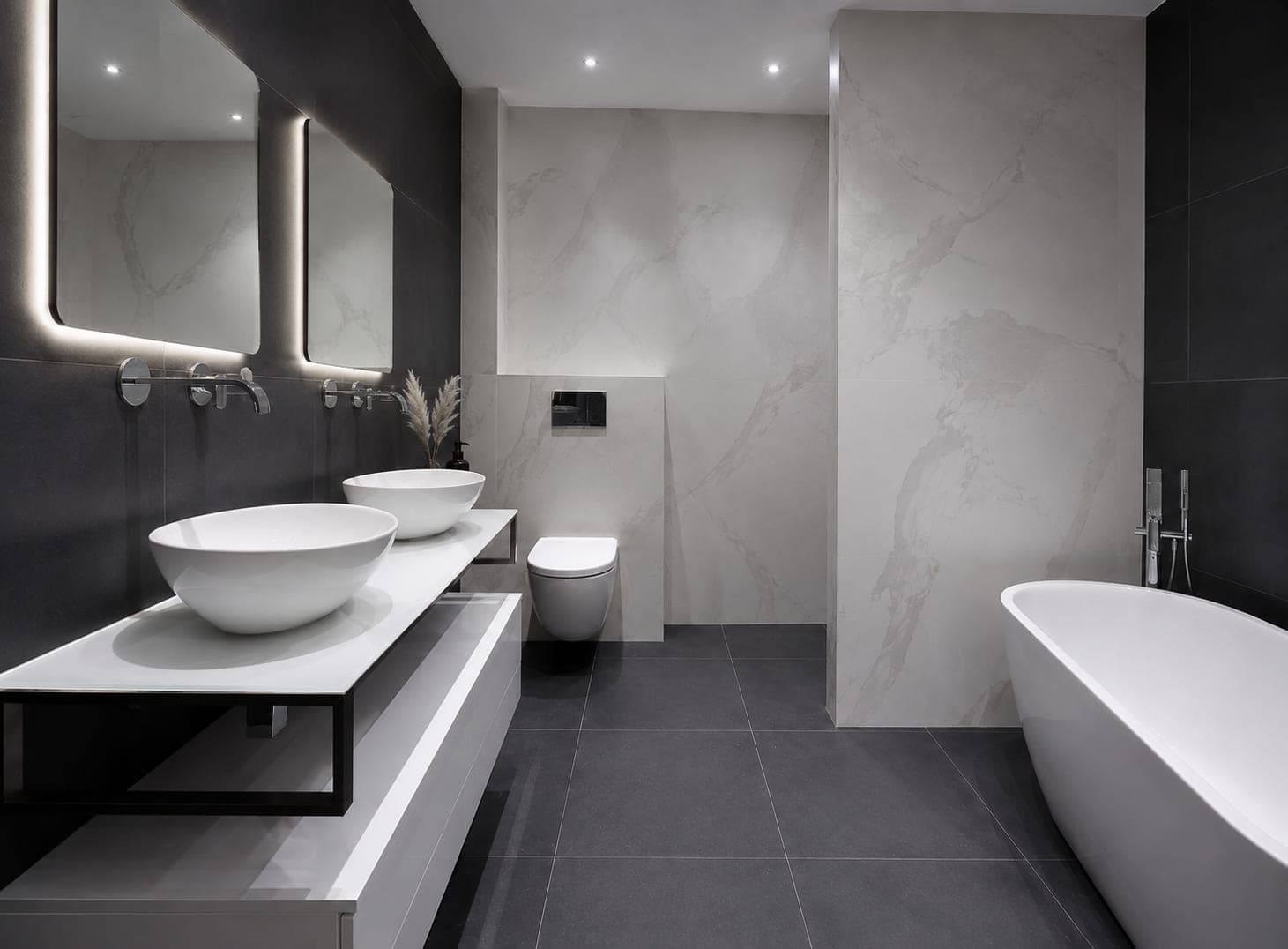
Having a new bathroom, kitchen or toilet sealed? Or have existing sealant joints discoloured, become damaged or come loose? We take care of both new sealant work and the skilled removal and replacement of old sealant. From sanitary ware and worktops to skirting boards, floors and window frames: you can count on a neat and durable finish. Send a few photos and quickly receive a clear price indication.
Since 1959
Experience and craftsmanship from Utrecht
Clear communication
Short lines, clear agreements
100% satisfaction
We only leave once you are satisfied
Lasting quality
Top-quality materials for a long-lasting result
Where we work
What we do for you
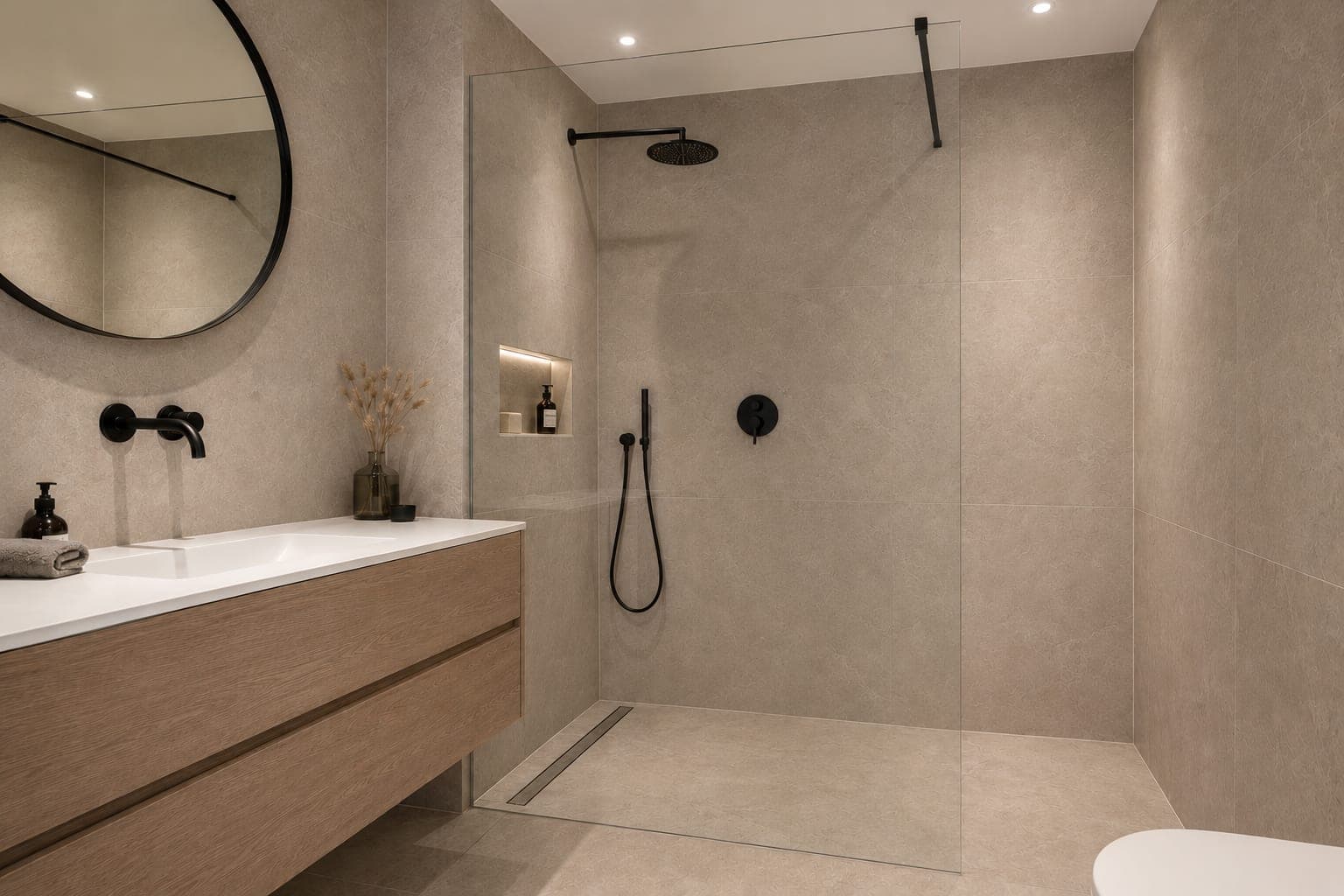
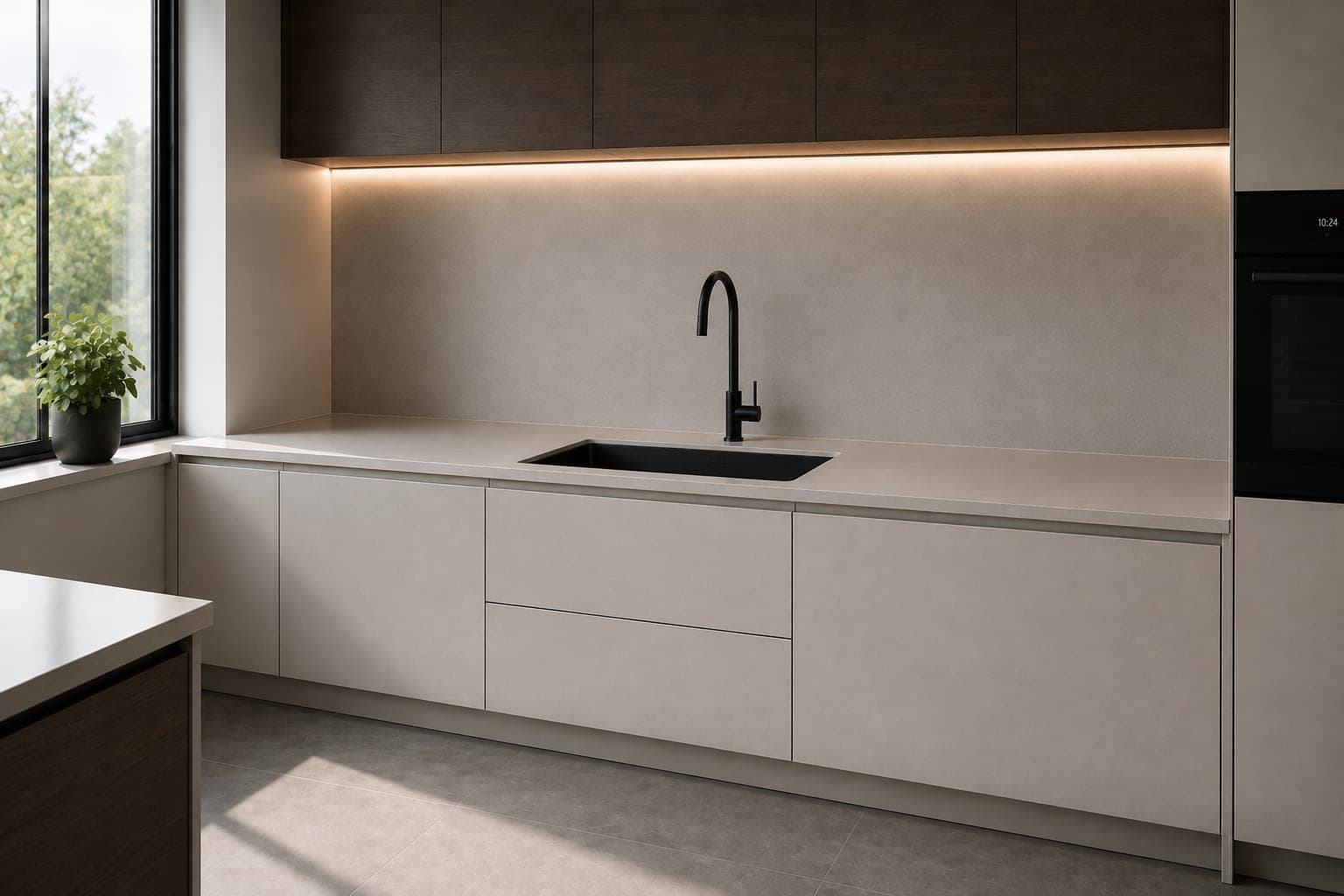
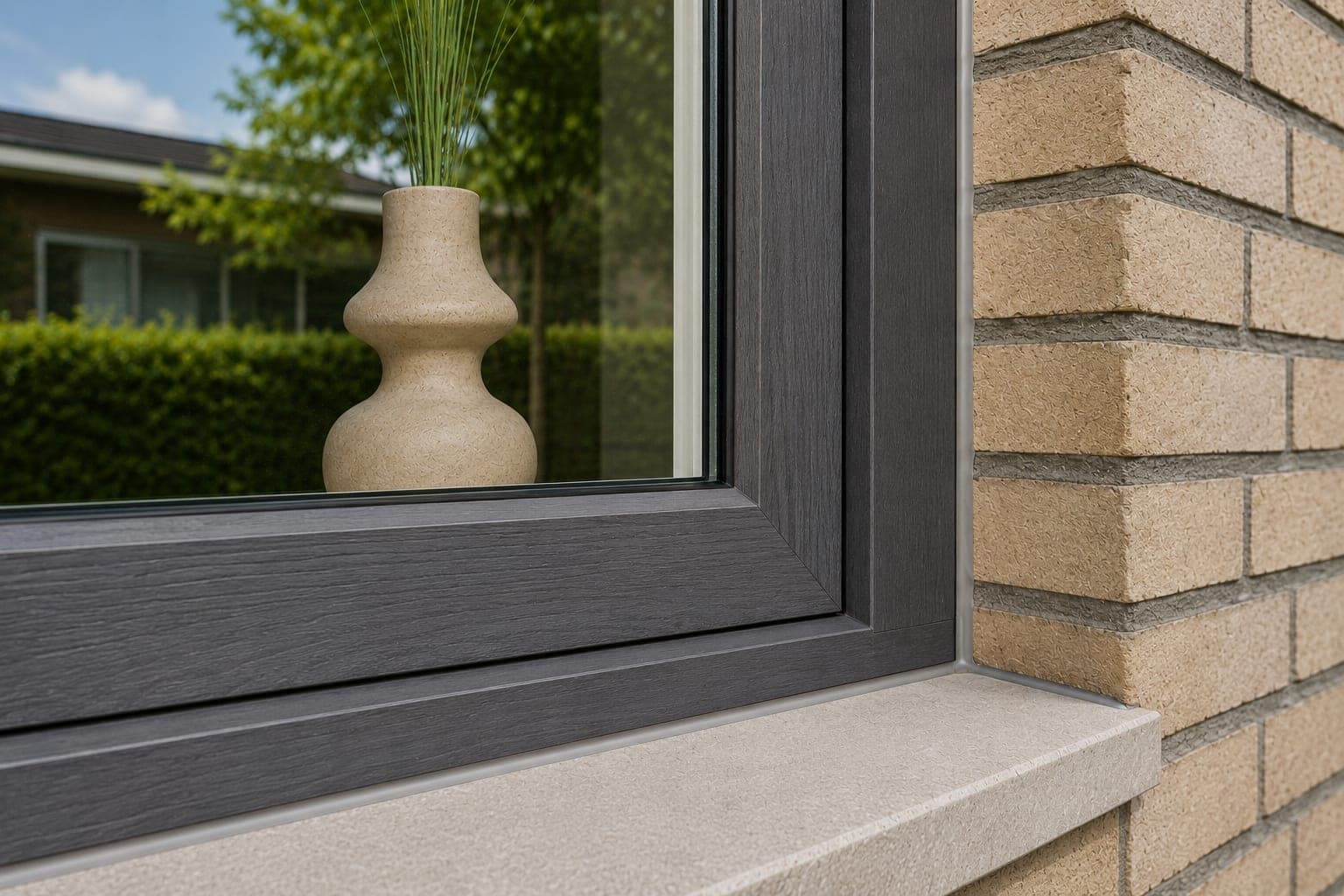
Sealant work is one trade with many different applications. A shower corner is under water day in, day out, a worktop joint has to withstand hot pans and cleaning products, and a window frame moves with the weather. Each spot calls for a different sealant, a different joint width and a different preparation. Below is what we come out for; further down this page you will find, room by room, what goes wrong and why.
What does it cost?
You know the price before we start
We charge for sealant work per linear metre. The rule is: the more metres within one job, the lower the price per metre. For every job we have to travel out, prepare our work and leave everything tidy again. Whether we seal two metres or ten.
Want the shower corner, the bath and the worktop done? Then it is often cheaper to tackle it all at once. We add the metres together and apply our sliding scale to the total.
Send a few photos via our price calculator or WhatsApp. Based on those we give you a first estimate. On site we measure the joints and look at what is needed. You hear the final price before we start. So you know where you stand.
Six things that determine the price
- How many metres it is. More metres within the same job means a lower price per metre. Measure the joints roughly in advance with a tape measure. Together with your photos, that helps us estimate the costs better.
- New sealant work or replacing old sealant. When replacing, we first remove the existing sealant and clean the surface. That takes extra time. A clean, well-prepared joint we can finish faster.
- The surface. Tiles, concrete, plastic or aluminium: not every surface calls for the same sealant and preparation. We match the materials to the location and its use.
- The condition of the surface. Are tiles loose, does the shower tray move or is the surface still damp? Then that has to be sorted out first. If we come across something like that, we discuss it with you before we continue.
- How easily we can reach it. Working behind a bathroom cabinet takes more time than along a free-standing edge. Joints at height may also need extra equipment to work safely.
- Where the job is. For homeowners we travel around 75 kilometres around Utrecht. The distance counts towards the costs. Do you live further away? Then we look at whether the distance fits the size of your job.
How it works
From photo to neat joint
This is what happens as soon as you get in touch. No sales pitch at the door and no adviser who comes to talk for an hour first. You send a photo and you get a price; only if we have doubts about the surface do we come and look first.
You send a few photos
You can do that via WhatsApp or via the quote form. Take one from a distance and one close up, so we can see the condition of the surface. If possible, add roughly how many metres of joint it is, which room it concerns and whether the sealant that is there now is coming loose, discoloured or cracking. That saves messaging back and forth.
You get a price
You get a price from us within 15 minutes on working days. It states what we do, which metres we have counted and when we can come. If we have doubts about the surface, we come and look first instead of guessing.
We clear out the old joint
The old sealant comes out completely, right down to the flanks. Then we make the surface clean, dry and grease-free, and where needed a primer goes on. If the joint is too deep, a backing rod goes in.
The new joint goes in
We choose the sealant based on the surface, not on what happens to be in the van. We run it through in one movement and finish it neatly. Before we leave, we walk through it together with you.
Let it cure
Sealant cures at around 2 to 3 millimetres per 24 hours. For a normal sanitary joint that means: no showering for two days. We tell you that in advance, so you can plan for it.
How long it takes
The work and the curing are two different times
There are two times that get mixed up: the time we are on site, and the time the sealant needs to cure. The second cannot be speeded up, and it determines when you can use the room normally again.
How long we are busy depends on the number of metres, whether the old sealant has to come out, how many rooms are done in one go and how accessible everything is. If something has to be repaired or dried first, we come twice. What it will be in your case is stated in the price you receive. We would rather name a day too many there than a day too few.
Curing goes at around 2 to 3 millimetres per 24 hours, at 20 degrees and 50 per cent humidity. A sanitary joint is at least 8 millimetres wide and 6 millimetres deep, so 24 hours is tight: allow two days before anyone showers again. In a cold or damp room it takes longer, not shorter. If you shower earlier, water gets into a joint that is not yet hard all the way through and the problem starts again.
Room by room
What goes wrong, and why it goes wrong
A sealant joint that comes loose or cracks almost never does so for no reason. There is a cause behind it, and it is usually not in the sealant itself but in the preparation or in the dimensions. Two kinds of failure keep coming back. Adhesive failure is coming loose along the flank: the sealant lets go of the tile or the worktop. That comes from a surface that was not clean, dry or grease-free, or from a sealant that does not suit that surface. Cohesive failure is a crack in the middle of the joint. That means the joint is too narrow for the movement it has to follow. Refilling then solves nothing, because the same movement remains.
Shower and bathroom
Black spots in the joint are mould that sits in the sealant, not on it. Scrubbing removes the top and the rest stays. Worse: chlorine-based and aggressive cleaners wash the mould-inhibiting agent out of the sealant and make the edge porous, so it comes back faster afterwards than before.
The second common cause is a joint that is bonded on three sides. A sealant joint may only bond on two sides. If it also bonds to the bottom, the middle cannot stretch and it cracks. That is why a backing rod or bond-breaker tape goes behind it. Beyond that, ventilation counts for more than the sealant: a bathroom that is not aired after showering stays wet, and then the mould beats every product.
Kitchen and worktop
The joint between worktop and back wall gets heat, grease and cleaning products over it, and the worktop expands and shrinks with the temperature. If the sealant comes loose here, water runs behind the worktop. You only see that when the chipboard underneath swells, and then the sealant is the smallest problem.
If the worktop is natural stone or composite, only natural stone sealant may go on it. Ordinary sealant causes edge staining: free plasticisers and silicone oil are drawn into the pores and leave a dark edge along the joint, often only visible after weeks. That is irreparable. Scrubbing does not help, and sealing over it does not either.
Window frames and facade
Outdoors, movement plays the leading role. Every material expands differently: concrete 10 to 12 millionths per degree, aluminium 23 to 24, PVC 70 to 80. That is why it is precisely the connection joints between two different materials that accommodate the most movement, and why the width of such a joint is not a matter of taste. The joint width follows from the movement the joint has to follow. For elastic sealant, 8 millimetres is the minimum, and the depth is the width divided by three plus 6 millimetres.
Outdoors, two things go wrong most often. Acetic-cure silicone sealant does not belong on bare aluminium, copper, zinc, lead, natural stone or concrete, because it loses its adhesion there. And a sealed-up drainage slot in the bottom rail eventually wrecks the insulating glass: that rebate has to stay pressure-equalised, so those openings stay open.
Floors and expansion joints indoors
An expansion joint is the joint that deliberately keeps the floor open so that the movement of the structure has somewhere to go. If it is full of hard grout or of sealant that is too narrow, the stress comes out somewhere else and the tile cracks. In a hallway or an open-plan kitchen such a joint often runs exactly where you would not want it, and that is not a design flaw but the point.
A floor joint that is walked on has to withstand shoe soles, vacuum cleaner wheels and cleaning water. That calls for a sealant that can take it and a joint made to size, not the leftovers from the bathroom cartridge.
Sealant joints are best inspected in the cold season. The building elements are then contracted and the joint is at its widest, so you see a starting crack that lies closed in summer. For facade work the usual line is: a first inspection within a year of handover and every two years after that.
Good to know
What you are probably wondering
Can I not just scrub the mould out?
Usually not. Once the mould is in the sealant, it sits deeper than you can reach and replacement is the only real solution.
How long does a new sealant joint last?
That depends on the room, how well it is ventilated and how you clean it. A shower that is aired after use and cleaned with a mild product lasts years longer than a bathroom without a window that is scrubbed with chlorine. At handover you get brief instructions.
Why can I not shower again straight away?
Sealant needs time to cure, around 2 to 3 millimetres per 24 hours. For a sanitary joint 6 millimetres deep that is two days.
My tiles are loose. Can it still be done?
Not straight away. Applying sealant over loose tiles does not solve the problem. We tell you honestly if the surface has to be repaired first, even if that means we cannot do the job straight away.
Where do you come to homes?
The further you live from Utrecht, the more time goes into the journey. If that is not worthwhile for one single joint, we would rather say so straight away than name an amount nobody is happy with. That is a practical limit: for a single joint further away, more time goes into the journey than into the work, and you see that in the price. For projects we work throughout the Netherlands. If you are unsure whether your address falls within that, include your postcode and we will tell you straight away.
Do you also do a single joint?
Feel free to ask, and we will work it out for you. With a single joint, the set-up weighs heavily: clearing out, masking, cutting, degreasing and tidying up costs almost as much for two metres as for ten. If you have more spots that are due anyway, have them done in the same visit: the sliding scale on the total works in your favour.
Which sealant do you use?
We work with OTTO-CHEMIE and Soudal, from the top range of both brands. S 125 is the standard choice. But more important than the name: which sealant goes in, we choose based on the surface. Using the same one everywhere is exactly what you should not do.
Can the sealant be painted over?
Not silicone. Paint does not adhere to it and flakes off again, so the sealant edge stays visible. If it has to be painted over, for example along a wooden window frame indoors, then acrylic or a paintable hybrid belongs there. So say so in advance if you plan to paint, because re-sealing afterwards means starting again.
My house dates from before 1994. Does that matter?
For glazing sealant and putty it does. Material from before 1994 is suspected of containing asbestos, risk class 2 as standard. We do not just cut that out: that first requires a survey, then a demolition notification, and removal according to protocol by a certified company. If we see it at your home, we say so and we do not start work.
What can I do myself before you come?
Take your things out of the shower or off the worktop and make sure the joint is accessible. You need do nothing else. Above all, do not start cutting yourself or put a layer of new sealant over the old: then we have to take that out too and it becomes more expensive instead of cheaper.
What if something is not right?
You get a 2-year guarantee on the work carried out, one term for everything we do. What is and is not covered is stated in the quote. What is in any case excluded: movement and working of the structure, a surface that we did not install, cleaning with chlorine-based or abrasive products, and mould that grows on the sealant. We guarantee that the joint is sealed and stays sealed, not that a house stands still. That is why we measure the joint beforehand for the movement it has to follow, and tell you beforehand if that width is not right. This guarantee is in addition to your statutory rights and does not limit them.

