
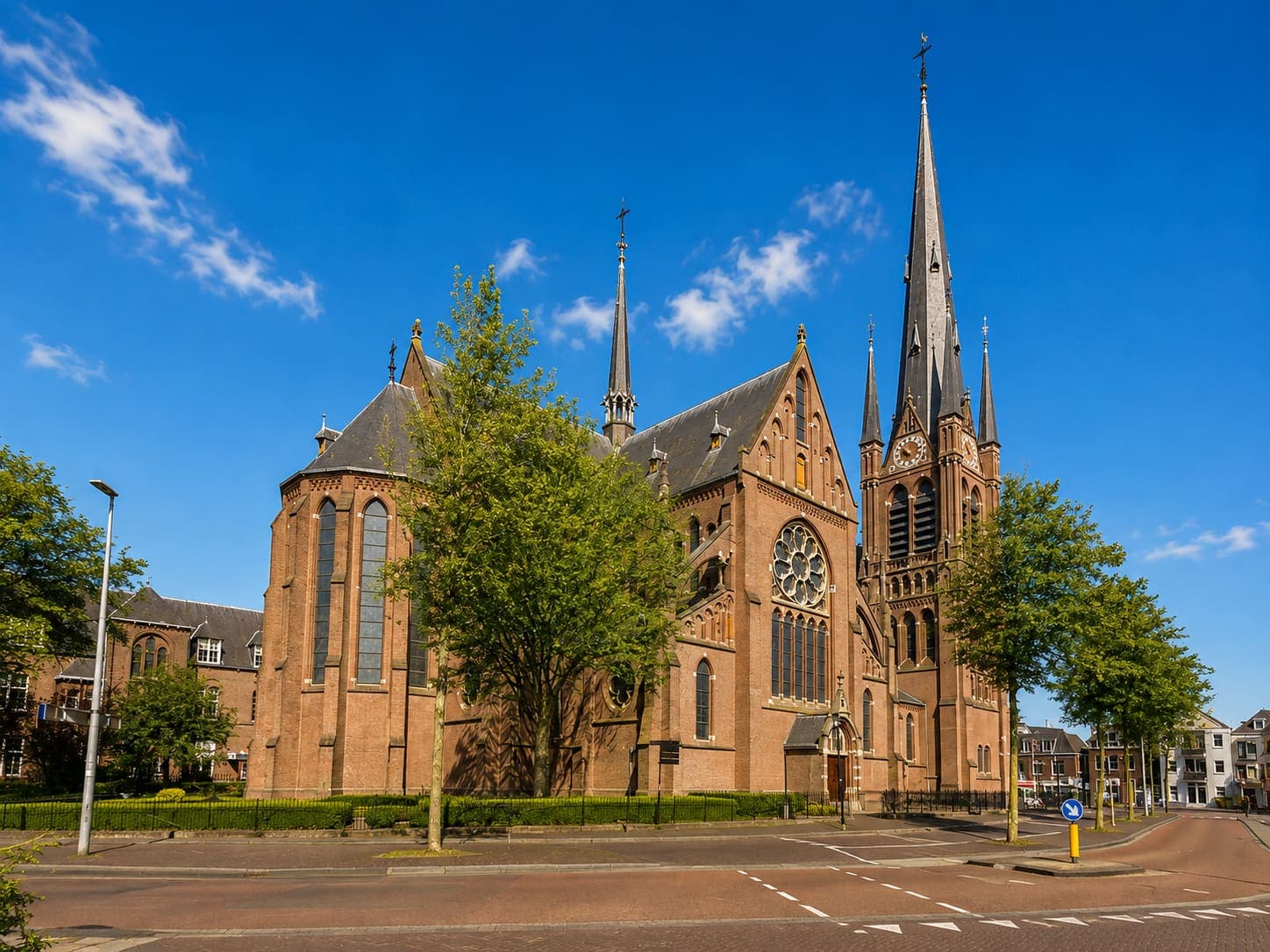
Utrecht · approx. 20 km from Utrecht
Sealant work in Woerden
Over eighty per cent of the municipality of Woerden lies on a layer of peat and clay more than five metres thick. It settles, shrinks and oxidises. What that does to a building ends up in the joint between two building components. And that is our work.
Since 1959
Experience and craftsmanship from Utrecht
Clear communication
Short lines, clear agreements
100% satisfaction
We only leave once you are satisfied
Lasting quality
Top-quality materials for a long-lasting result
What matters in Woerden
Peat moves, the joint has to follow
A fortified centre along the Oude Rijn, districts from the 1960s and 1970s, and on the edge of the town Snel en Polanen from the 1990s with Waterrijk, which was built after that and is still growing.
In the pentagon within the moat there are buildings with timber window frames, bluestone sills and glazing sealant that is sometimes still the original. The Schilderskwartier is 1960s and has been renewed bit by bit since 2008, so old and new window frames stand side by side there. Molenvliet began in the late 1970s and was only completed in the late 1990s. In the oldest part those bathrooms are due for their second or third round, in the newer part often for their first. Snel en Polanen dates from the 1990s, Waterrijk was built after that and is not yet finished. Both with many identical details in a row.
On sand a house stands still. Not here. Peat settles, and a building on piles stays put while the ground around it sinks away. As a result, the movement in a connection joint here can rise above what the sealant may deform according to the data sheet. That is why we first look at how the joint fails. Coming away along the flank is something different from a crack in the middle.
In the town centre you do not get far with a van: the moat runs around it and the streets are narrow. In the shopping streets there is a maximum parking time of three hours. In the Castellum and Defensie-eiland car parks you can stay longer and the rate is lower than on the street. On the Defensie-eiland the van therefore goes in the car park and we carry the materials round. What that costs in time, we tell you when you get the price.
Twenty kilometres on the A12 and we are there. You get a reply within 15 minutes on working days, and at the appointment you hear how many days the work takes. For a whole block or an industrial unit the work runs over more than a day: the sealant has to cure in between and fresh work cannot be walked on.
What we do in Woerden
- Bathroom, sanitary & kitchenSealing of sanitary ware, showers, baths, washbasins and kitchens.
- Window frames & glazingNeat, durable sealant work around window frames and glass.
- Facades & structural jointsFacade joints, connection joints and expansion joints in floors and walls.
- Swimming pool & wellnessSealant work in swimming pools, saunas, steam rooms and spas.
- Renovation & maintenanceSealant work during renovation, repairs and periodic maintenance.
- Specialist sealant workFor specific requirements and specialist applications.
You will hear from us within 15 minutes on working days, and the work comes with a 2-year guarantee.
The work here
What we do most often in Woerden
Connection joints on settling ground
Facade and window frame work against each other here, especially in a building that has settled out of true. We measure the joint first: at least 8 mm wide for elastic sealant, and the depth is the width divided by three plus 6 mm. A closed-cell PE backing rod goes in at the back, so that the sealant adheres on two sides and not on three.
More about this serviceBathrooms in the oldest part of Molenvliet
Molenvliet was built from the late 1970s onwards and only completed in the late 1990s. In the oldest part many bathrooms have already been renewed once or twice. Old sealant out completely, substrate dry and grease-free, then silicone with an anti-mould agent. Acrylic will not do there: it disperses under prolonged exposure to water. The joint is made 8 mm wide and 6 mm deep, otherwise it cracks in the middle.
More about this serviceExpansion joints on the business parks
Middelland, Barwoutswaarder, Polanen, Putkop and Honthorst are full of industrial units, offices and distribution. Concrete facade elements expand by 10 to 12 millionths per degree, so the expansion joint has to accommodate that movement without cracking. Acetoxy silicone does not go in: on alkaline concrete it loses its adhesion. A neutral-cure system belongs in there.
More about this serviceHow we approach it here
Which sealant on what, and what it costs
The substrate decides the sealant
Four substrates are what you come across most often here. Bluestone in the sills in the fortified centre: only natural stone sealant with chemically bound plasticisers may go on those. Free plasticisers and silicone oil migrate into the pores and leave a dark edge that cannot be polished out, often only visible after weeks. Painted timber in the districts around the centre, where the sealant has to be overpaintable: then silicone is out and it becomes acrylic or an overpaintable hybrid. Glazed tiling in the bathrooms of Molenvliet. And concrete and aluminium on the business parks along the Oude Rijn: acetoxy silicone does not belong on concrete or on bare aluminium. As standard, OTTOSEAL S 125 goes in, but the substrate determines what it becomes.
Costs and lead time
Snel en Polanen and Waterrijk were built in series: the same window frame connection, block after block. There you notice the sliding scale most strongly. We charge per linear metre, and the more metres there are in one job, the lower that price per metre becomes. If you manage a row of identical homes or are in a homeowners' association (VvE), request it in one go and not per home: loose metres work out more expensive. We do not put amounts here, because the rates have not been fixed. Beyond that, count on a bathroom in the oldest part of Molenvliet costing more than the same metres in the new build of Snellerpoort: it has the second or third round of sealant in it, and that has to come out completely first. That cutting out is most of the work, not the application. If it is your own bathroom, allow for two to three days without showering: sealant cures at roughly 2 to 3 mm per 24 hours, and a joint 6 mm deep is not ready after one night. If you are working towards a handover, put those days in the schedule and not after it. The work comes with a 2-year guarantee. Here of all places, what is not covered counts: movement and working of the building. The peat keeps settling, and settling ground is not a fault in the joint. What we do is measure the joint against the movement it has to accommodate, so that it is not made too narrow. What comes out of that, you hear beforehand and not afterwards.
Two routes
Business or homeowner in Woerden
Woerden has five business parks: Middelland, Barwoutswaarder, Polanen with a lot of transport and distribution, Putkop in Harmelen and Honthorst. There it is about expansion joints between concrete elements, floor joints that are walked on and joints that have to withstand cleaning. Snellerpoort is being built now, so there is finishing work there for contractors and interior fit-out. In the districts being renewed, sealant work usually goes along with a larger maintenance or renovation plan. If you are a painter, property manager for a homeowners' association (VvE) or housing manager, you can place that part with us separately. If we work under a main contractor, such as for finishing work in Snellerpoort or a renovation in the Schilderskwartier, we apply the VAT reverse charge, so it is not on our invoice.
For businesses
Contractors, painters, homeowners' associations, property managers and interior fit-out.
See what we do for businessesAlso near Woerden
As the crow flies from the centre. By road it is further.
- Nieuwerbrug 5 km
- Zegveld 5 km
- Linschoten 4 km
- Kamerik 5 km
- Harmelen 6 km
- Oudewater 8 km
- Montfoort 7 km
- Bodegraven 8 km
Is your town or city not listed? See the whole service area.
Questions from Woerden
What people in Woerden ask most often
Our house has settled at the back. Is resealing worth it then?
That depends on how the joint fails. If the sealant comes away along the flank, that is called adhesive failure, and thorough cutting out, cleaning and priming helps. If it cracks in the middle, it is cohesive failure: the joint was designed too narrow for the movement it has to accommodate, and refilling solves nothing. Then we make it wider first. That is why we always measure first here.
When is a good time to have my exterior joints checked?
Preferably in the cold season. Building components contract then and the joint is at its widest, so you see exactly how much movement there is in it and where the sealant is already coming away. In summer everything is expanded and a joint looks better than it is. On peat the settlement of the building comes on top of that, so in winter you see it more honestly.
Our bluestone sills and the natural stone window sill have just been cleaned. Can the sealant around them go straight back in?
Yes, provided the right sealant goes in, and with natural stone that is a fine line. Bluestone is porous. From an ordinary sealant, free plasticisers and silicone oil migrate into the stone, and that leaves a dark edge along the joint. It often appears only weeks later and by then cannot be polished out. On sills that have just been cleaned that stands out twice as much. Silicone that cures with acetic acid, recognisable by the vinegar smell, has no place on it at all. We use natural stone sealant with chemically bound plasticisers and exclude edge-zone staining in writing beforehand, so you know where you stand.
Our house in Snel en Polanen dates from 1999. Is sealant work already due?
Inside, almost certainly. Sanitary sealant in a bathroom that is used daily does not last as long as the bathroom itself; in a house from 1999 the first round is usually long gone. We look at the condition of the joint, not at the year of construction. Outside, the movement is mainly in the connection between materials that expand differently: plastic stretches five to eight times as much per degree as concrete. It is precisely those connection joints that take the most movement and so fail first.
Our building in the fortified centre still has the original windows, with putty that has never been out. Can you start on that?
Not until it is clear what is in it. Glazing sealant and putty that went in before 1994 are suspected of containing asbestos: risk class 2 as standard. It first has to be tested what it is, and the removal is done according to protocol by a company that is licensed for that work. We cut nothing out until that is settled. In the pentagon within the moat there are many buildings where this applies, so with original glazing this is step one. If you do not know the year, that in itself is reason enough to have it looked into.

