
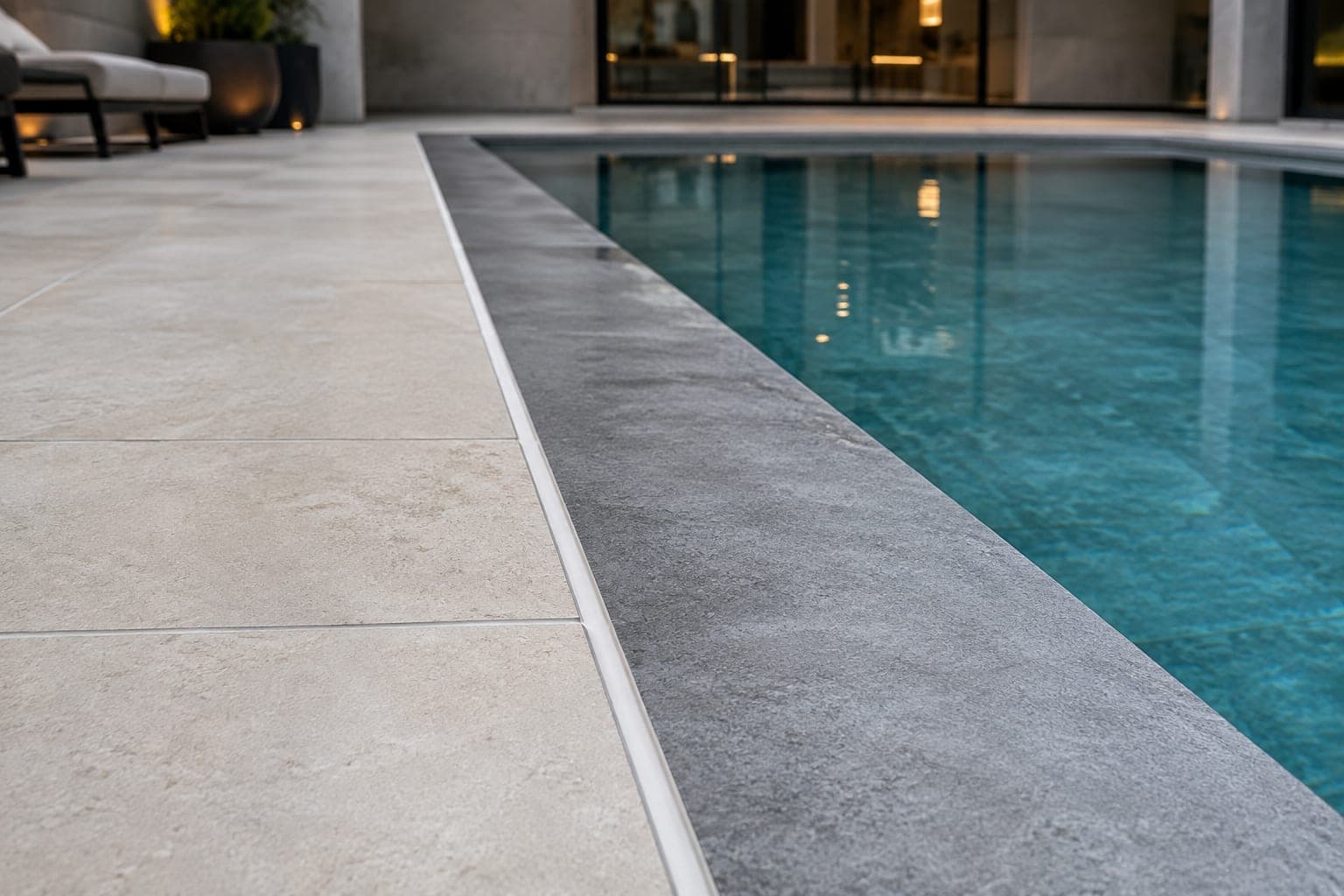
Swimming pool & wellness
Sealant work in swimming pool and wellness
Warm, permanently damp and chlorinated. That is the harshest environment there is for a sealant joint. The choice of sealant, the joint size and the inspection schedule are therefore different here from a bathroom at home.
Since 1959
Experience and craftsmanship from Utrecht
Clear communication
Short lines, clear agreements
100% satisfaction
We only leave once you are satisfied
Lasting quality
Top-quality materials for a long-lasting result
What we come for
Which joints these are
This is about every elastic joint in and around the wet room: where water stands, where vapour condenses and where two materials meet. Both in a private swimming pool or wellness area at home and in a swimming pool, hotel, sports centre or care institution.
Pool edge and surround
The joint between the pool edge and the tiling, the connection to the overflow channel and the joints in the surround around it. Here water stands against the joint permanently.
Sauna, steam room and vapour room
Glass on tile, glass on wood, and the connections in a cabin that heats up and cools down again and again. The sealant has to accommodate that movement and withstand the temperature. Which sealant that is depends on the manufacturer's product data sheet. We request it before we make a choice.
Spa, whirlpool and bath
A bath that is filled and emptied moves. The joint between the tub and the tiled front has to follow that movement instead of holding it back. That is why we look at the play first and only then at the sealant.
Changing rooms and shower rooms
The rooms around it that belong to it but are often tendered separately: shower rooms, changing cubicles, toilets and the connections to the floor.
Why it is different here
Chlorine is harder on the joint than water
In a bathroom at home it is wet for half an hour a day. In a swimming pool or wellness area it is wet all the time, and there is chlorine in the air. That difference is not in the amount of water but in what it does to the sealant.
Chlorine washes the mould-inhibiting agent out
Sanitary sealant contains a fungicide: an agent that slows the growth of mould on the joint. Chlorine-based and aggressive cleaners wash that agent out and make the edge porous. After that the mould comes back faster than before. In a room where chlorine air is permanently present, that process carries on without anyone cleaning.
Acrylic does not belong here, and silicone cannot take paint
Acrylic sealant disperses under prolonged exposure to water: the material slowly dissolves and the joint becomes soft and porous. So in a wet room silicone or a hybrid goes in, with a mould-inhibiting agent. Silicone, in turn, cannot be painted over. If paint has to go over it, we choose a paintable hybrid and say in advance what that means.
Natural stone is the expensive mistake here
Wellness areas are full of marble, travertine and composite. Free plasticisers and silicone oil seep into the pores and leave a dark edge along the joint, often only visible after weeks and impossible to undo. Polishing does not help. That calls for a natural stone sealant with chemically bound plasticisers. Acetic-cure silicone does not go on natural stone, marble, concrete, bare aluminium, copper, zinc, lead or mirrors in any case.
Backing rod of closed cell, not of open cell
A sealant joint may adhere to two flanks only. If it is also stuck to the base, the middle cannot stretch and the joint tears open. That is why a backing rod belongs behind it. Where there is exposure to water that is closed-cell PE, 25 to 50 per cent oversized. Open cell soaks itself full and has no place here, and neither do wooden strips, rubber hose or PU foam.
Dimensions and time
The joint size and how long the bath has to stay empty
Width and depth
At least 8 mm, depth is width ÷ 3 + 6 mm
Below 8 millimetres an elastic sealant has no room to stretch. The depth follows from the width: a joint 18 millimetres wide becomes 12 millimetres deep, and the sealant should be thinner in the middle than along the flanks. A tear in the middle of the joint means it was designed too narrow; refilling does not solve that.
Curing
Roughly 2 to 3 mm per 24 hours
Measured at 20 degrees and 50 per cent humidity. So one day is not enough for a joint 6 millimetres deep; allow two. If a pool or bath has to be drained for that, we say in advance how many days it involves. Then you can schedule it instead of finding out on handover day.
What we do and do not promise
A sealed joint, and honesty about the rest
The work carried out comes with a 2-year guarantee: the joint is sealed and it adheres. What is not covered we would rather say here than afterwards. Mould growth on the sealant, cleaning with chlorine-based or abrasive agents and insufficient ventilation fall outside the guarantee, and those are precisely the three things that bite hardest in a swimming pool or wellness area.
What we offer in return: you are told in advance which sealant we choose and why, at handover you receive short maintenance instructions setting out what you may and may not clean with, and in these rooms we count on a shorter service life and a tighter inspection schedule. That is not hedging our bets but the reason we write it down in advance.
For consumers, this guarantee comes on top of your statutory rights and does not limit them.
How we work
From site survey to release
Site survey: substrate, size and agent
We look at what the joints have to adhere to, check the existing width and ask what is used for cleaning. If there is natural stone or composite, we find out which material it is before we choose a sealant.
Price and schedule
You will hear from us within 15 minutes on working days. We agree how long the room or the pool can be out of use, because the schedule depends on that and not the other way round.
All the old sealant out
No sealing over old work: sealant does not bond to sealant. Everything out down to the flanks, substrate clean, dry and free of grease, and a primer where needed.
Backing rod and applying the sealant
Closed-cell PE at the right depth and with the right oversize, so the sealant adheres on two sides and not on three. Then fill, press in and tool it off neatly.
Curing, release and recording
For each room we tell you from when water can go on it again. On projects we record the work on video and you receive the maintenance instructions with it.
What does it cost
Price per linear metre
We charge per linear metre, on a sliding scale: the more metres in a single job, the lower the price per metre. For subcontracting we apply the VAT reverse-charge scheme.
Do you not know the number of metres, which is often the case with a pool edge? Then send a few photos and the dimensions of the room. We will work it out together.
Frequently asked questions
Questions about sealant work in swimming pool and wellness
Why does sealant fail faster at a swimming pool than in a bathroom at home?
Because of three things at once. The air is permanently humid instead of half an hour a day, it is warm, and there is chlorine in the air. That last one is the toughest: chlorine-based and aggressive agents wash the mould-inhibiting agent out of the sealant and make the edge porous. After that it goes faster and faster. A joint that lasts years at home has a shorter service life in a swimming pool room and needs a tighter inspection schedule.
Which sealant belongs in a swimming pool or wellness area?
Silicone or a hybrid with a mould-inhibiting agent in it. Acrylic does not go in: it disperses under prolonged exposure to water, the material slowly dissolves and the joint becomes soft and porous. If there is natural stone, a natural stone sealant with chemically bound plasticisers belongs there. Acetic-cure silicone is kept away from natural stone, marble, concrete, bare aluminium, copper, zinc, lead and mirrors.
There is natural stone around our bath. What should I watch out for?
The plasticisers. Free plasticisers and silicone oil seep into the pores of natural stone and leave a dark edge along the joint. That edge-zone staining often only becomes visible after weeks and cannot be undone; polishing does not help. It is the most expensive mistake in this trade, and it is precisely in wellness areas that a lot of natural stone is used. We find out what is there before a cartridge is opened.
How wide does such a joint have to be?
For elastic sealant, 8 millimetres is the lower limit. The depth follows from the width: width divided by three, plus 6 millimetres. A joint 18 millimetres wide therefore becomes 12 millimetres deep. If a joint tears through the middle, it was designed too narrow and refilling solves nothing. If it comes away along the flank, the problem lies in the preparation and not in the size.
How long does it take before water can go on it again?
Sealant cures at roughly 2 to 3 millimetres per 24 hours, measured at 20 degrees and 50 per cent humidity. So 24 hours is not enough for a joint 6 millimetres deep. Allow two days, and longer if it is cold or very humid. If a bath has to be drained, we say in advance how many days that is, so you can schedule it.
Is mould on the joint covered by the guarantee?
No. You get a 2-year guarantee on the work carried out: the joint is sealed and adheres. Mould growth on the sealant falls outside that, as does cleaning with chlorine-based or abrasive agents and insufficient ventilation. In a swimming pool or wellness area that is not small print but the heart of the matter: that environment is exactly what attacks the sealant. That is why you receive maintenance instructions with it and we advise a shorter inspection interval.
How often does it need to be inspected?
For wet rooms we advise a first inspection within a year of handover and every two years after that. In a room with chlorine that is the upper limit and not a guideline: there we would rather look more often. For a managed property you can include that in the maintenance plan, so you plan replacement instead of chasing a leak.
Read more

