
Utrecht · approx. 15 km from Utrecht
Sealant work in Den Dolder
Den Dolder lies on sandy ground, hemmed in by woods on almost every side. The ground is stable, so settlement hardly plays a part here. What does play a part is moisture: facades among trees get little sun, dry slowly and hold on to growth. And no sealant adheres to a layer of growth.
Since 1959
Experience and craftsmanship from Utrecht
Clear communication
Short lines, clear agreements
100% satisfaction
We only leave once you are satisfied
Lasting quality
Top-quality materials for a long-lasting result
What matters in Den Dolder
A village in the middle of the woods
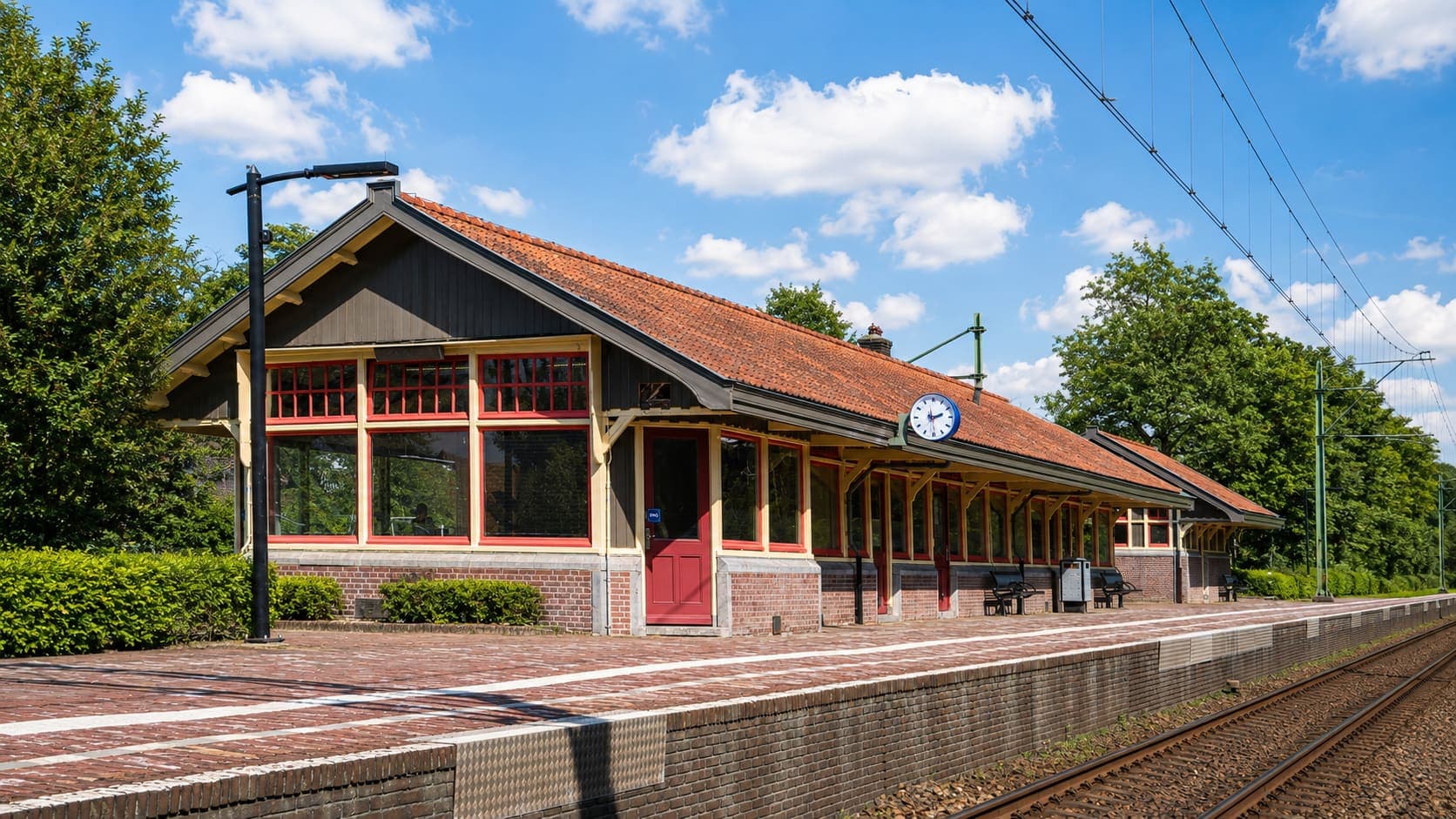
Scattered buildings among the woods, a village centre around the station, and large-scale care and institutional buildings on spacious grounds.
Around the centre there are mixed buildings of varying ages; whatever dates from before 1994 is suspected of containing asbestos until testing shows otherwise. In the wooded parts there are detached houses with a lot of timberwork in the facade and large windows that look out onto the greenery. On the grounds of the care institutions there are larger buildings with long facades, where it is about expansion joints and connections over considerable lengths rather than single joints around a window frame.
The deciding factor here is the combination of shade and timber. Timber moves with moisture, and facades that get little sun stay wet for longer after rain. That means the substrate is more often not dry enough for us to start on, and that we then postpone by a day rather than carry on working. A joint put onto damp timber comes away within a season, and then the work has been paid for twice.
Parking is not a problem here: large plots, private driveways and designated spaces on the institutional grounds. The point to watch is access to the rear. Many houses stand with their rear facade towards the woods, with vegetation right up against the facade and a path that cannot be driven on. We check that during the site survey, so that we know whether we can work with a scaffold or have to do it in sections.
Fifteen kilometres from our base, about twenty minutes. Close enough to come out for a single bathroom too; the call-out charge stays limited. For work on the larger grounds we plan several consecutive days, because there it is about long lines and the equipment can then stay in place.
What we do in Den Dolder
- Bathroom, sanitary & kitchenSealing of sanitary ware, showers, baths, washbasins and kitchens.
- Window frames & glazingNeat, durable sealant work around window frames and glass.
- Facades & structural jointsFacade joints, connection joints and expansion joints in floors and walls.
- Swimming pool & wellnessSealant work in swimming pools, saunas, steam rooms and spas.
- Renovation & maintenanceSealant work during renovation, repairs and periodic maintenance.
- Specialist sealant workFor specific requirements and specialist applications.
You will hear from us within 15 minutes on working days, and the work comes with a 2-year guarantee.
The work here
What we do most often in Den Dolder
Timber facade elements
Where timber meets timber or masonry, the joint has to follow the seasonal movement of the timber. A sealant that has gone hard cracks there first. We check that the timber is dry and sound before we apply anything, and use a permanently elastic product that can follow that annual swelling and shrinkage.
More about this serviceLarge windows onto the greenery
Houses here often have wide windows that look out onto the woods. Large panes expand more in the sun than small ones, and the sealing around them goes through that movement every day. There we choose on the basis of stretch and check the rebate for a sound substrate, because nothing adheres permanently to decayed timber.
More about this serviceBuildings on the grounds
With the larger buildings it is about expansion joints and connections over long lengths, often on concrete or facade cladding. What counts there is both adhesion to a smooth surface and the stretch that large surfaces call for. We work in sections so that the joint keeps the same width over its full length.
More about this serviceHow we approach it here
Which sealant on what, and what it costs
The substrate decides the sealant
Timber is the most common flank here, and that sets two requirements. The first is moisture: sealant does not adhere to wet timber, and facade timber that has had rain feels dry on the outside while a millimetre deeper it still holds moisture. In a wooded setting with little sun that drying takes longer than elsewhere, so we measure it or we wait. The second is the finish: on painted or stained timber the sealant adheres to that layer and not to the timber underneath. Add to that the growth that forms on shaded facades; a thin layer of algae you can hardly see makes adhesion impossible and has to come off mechanically. On the grounds, concrete and facade cladding are the flanks, with their own requirements for cleaning and product.
Costs and lead time
The price follows from metres, accessibility and the preparation, and the last of those weighs more heavily here than average. Removing growth and waiting until timber is dry costs time that you earn back in lifespan; we factor that in honestly instead of forcing the work. For buildings from before 1994 the asbestos test comes before the quote. For a bathroom we generally allow half a day. On the grounds we work per metre, which makes the budget predictable. What the sealant needs to cure through is separate from the working time, and you get it with the schedule.
Two routes
Business or homeowner in Den Dolder
On the institutional grounds it is about buildings with long facades that suit a fixed price per metre, and where planning matters more than speed: people live and work there, so we agree on when we will be where. For contractors and managers in the residential areas it is about detached properties with a lot of timberwork, where the preparation makes the difference between five and fifteen years. We hand over each facade with images of what has been carried out.
For businesses
Contractors, painters, homeowners' associations, property managers and interior fit-out.
See what we do for businessesAlso near Den Dolder
As the crow flies from the centre. By road it is further.
- Bilthoven 4 km
- Zeist 4 km
- Soesterberg 6 km
- Soest 6 km
- Driebergen-Rijsenburg 7 km
Is your town or city not listed? See the whole service area.
Questions from Den Dolder
What people in Den Dolder ask most often
Why can you not just carry on working after rain?
Because sealant does not adhere to wet timber, and that is not a matter of caution but of whether the work holds. Facade timber that has had rain feels dry on the outside while just beneath it still holds moisture. Put a joint in there and it comes away within a season. In a wooded setting with little sun, drying also takes longer. We measure it or postpone by a day, and we let you know as soon as we see it.
There is green growth on my facade. Is that a problem?
For the brick usually not, for the sealant work it is. A thin layer of algae or moss that you can hardly see with the naked eye ends up between the sealant and the substrate and makes permanent adhesion impossible. The joint then looks fine and comes away a year later. That is why we clean the flanks mechanically before we apply anything: not just a quick rinse, because then the layer that matters stays put.
Does my house settle here too, like in the polder?
Hardly. Den Dolder lies on sandy ground and that is a stable substrate; the settlement that determines the joint width in the peat meadow areas plays almost no part here. That does not mean there is no movement: masonry, timber and glass expand in the sun and shrink again at night, every single day. That daily movement is the measure we base the joint width on here, and it is smaller than on soft ground.
Can you get to my rear facade on the edge of the woods?
We check that during the site survey, because it determines the approach. Many houses here stand with their rear towards the woods, with vegetation right up against the facade and a path that will not bear a scaffold. If a mobile scaffold tower cannot get along it, we work in sections from a ladder where it is safe to do so, and we say honestly which part we cannot carry out to the same quality. Pruning beforehand often helps more than you would think.
Do you also work on the care grounds here?
Yes, and there the planning weighs more heavily than the pace. People live and work on grounds like that, so we agree in advance when we will be at which building and we stick to it. The work itself is about expansion joints and connections over long lengths, usually on concrete or facade cladding; that can be budgeted per metre. We work in sections so that the joint keeps the same width over its full length.

