
Utrecht · approx. 12 km from Utrecht
Sealant work in Bilthoven
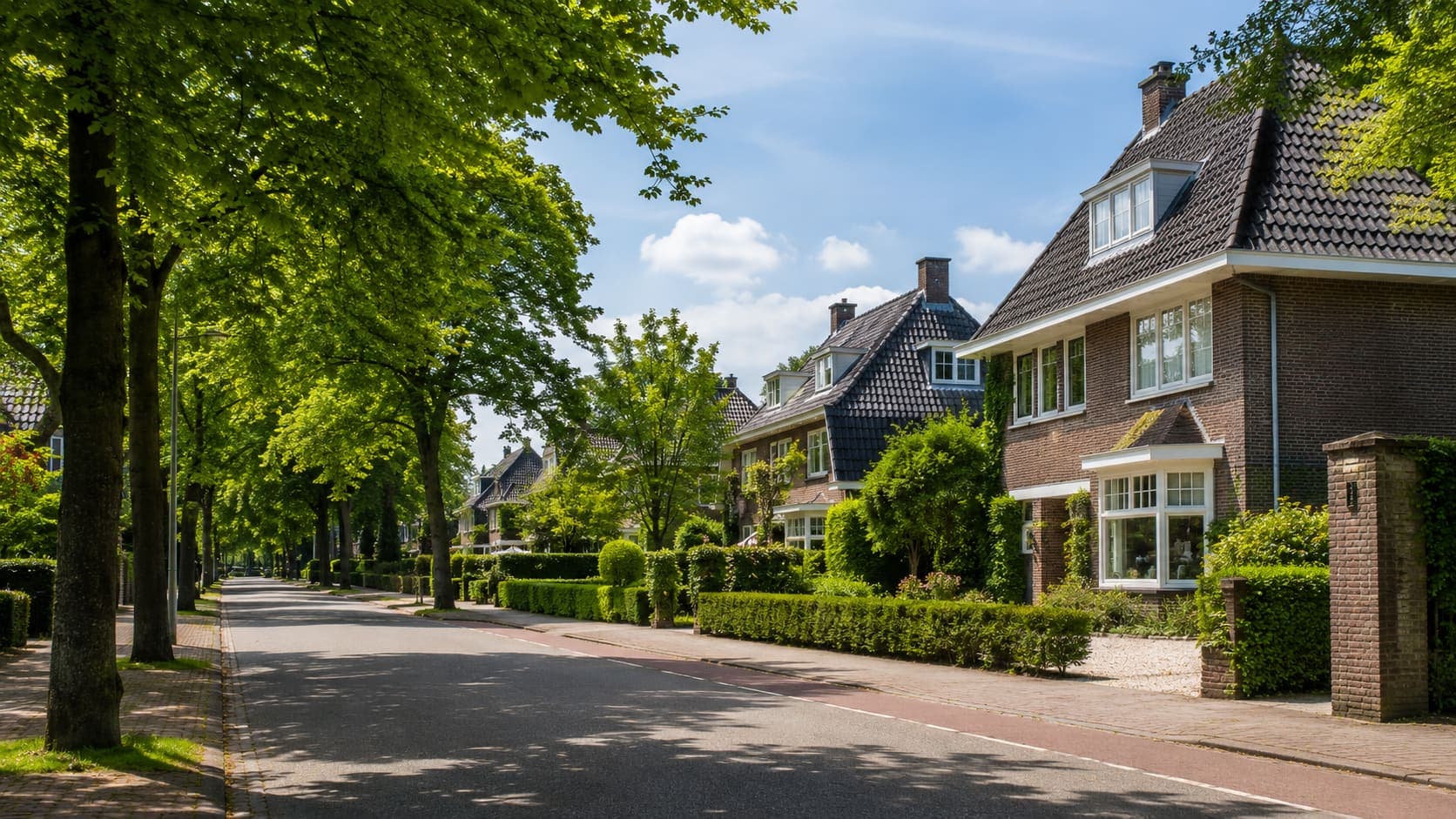
Bilthoven is a villa village on sandy ground, with a lot of woodland and large plots. For sealant work the point to watch is not the ground but the vegetation. Facades that stand in the shade for most of the day dry slowly and stay damp longer, and that is a very different load from full sun.
Since 1959
Experience and craftsmanship from Utrecht
Clear communication
Short lines, clear agreements
100% satisfaction
We only leave once you are satisfied
Lasting quality
Top-quality materials for a long-lasting result
What matters in Bilthoven
Shade and trees next to the facade
Villas and country houses on spacious, wooded plots, a station area with mixed building, and post-war residential neighbourhoods on the edges.
In the villa neighbourhoods there are large detached buildings with timber window frames, tall windows and glazing that is often still original. Many of those buildings stand among mature trees, so the facades lie in the shade for most of the day. Around the station the building is mixed, with shopfronts on the ground floor. The post-war neighbourhoods on the edges were put up in rows and are past their first round of replacement; whatever there dates from before 1994 is suspected of containing asbestos until testing shows otherwise.
What sets this place apart is not sun but shade. A facade in the lee of old trees dries slowly after rain and so stays damp longer; on top of that, leaves fall and algae and moss grow on the brickwork and in the joints. For us that means two things: the flanks have to be cleaned more thoroughly before anything goes in, and we choose a product that can withstand prolonged wetting rather than strong sun.
Parking is rarely a problem here: the buildings have their own driveway and we park in the grounds. The bottleneck is the access route for equipment. Mature planting, narrow gates and gravel paths determine whether a mobile scaffold tower can be got into position, and with tall facades among trees an aerial work platform is sometimes the only option or simply impossible. We check that at the site survey instead of finding out on the working day.
Twelve kilometres from our base, about twenty minutes. Close enough to come for smaller work too, and the call-out fee stays limited. For larger buildings we plan several days in a row: equipment that stays in place is cheaper than putting up and taking down twice, and you do not have to be at home on several separate occasions.
What we do in Bilthoven
- Bathroom, sanitary & kitchenSealing of sanitary ware, showers, baths, washbasins and kitchens.
- Window frames & glazingNeat, durable sealant work around window frames and glass.
- Facades & structural jointsFacade joints, connection joints and expansion joints in floors and walls.
- Swimming pool & wellnessSealant work in swimming pools, saunas, steam rooms and spas.
- Renovation & maintenanceSealant work during renovation, repairs and periodic maintenance.
- Specialist sealant workFor specific requirements and specialist applications.
You will hear from us within 15 minutes on working days, and the work comes with a 2-year guarantee.
The work here
What we do most often in Bilthoven
Facades in the shade
Facades that get little sun dry slowly and hold moisture, with algae and moss in the joints as a result. We first clean the flanks thoroughly down to a sound substrate, because on a layer of growth no product adheres permanently. Then a sealant goes in that can withstand prolonged wetting.
More about this serviceTall windows
The villas here have windows that run up close to the gutter, with glazing sealant that after decades comes away along the whole length at once. At that height you only notice it once the timber in the sill has been affected. At the site survey we assess whether the timber is still sound before we give a price for sealant work alone.
More about this serviceWellness and second bathrooms
Homes like these more often have a sauna, steam cabin or second bathroom. High humidity and heat put more strain on a sanitary joint than daily showering, and an ordinary sanitary sealant does not last under that. We first look at how the room is used and ventilated and only then choose the product.
More about this serviceHow we approach it here
Which sealant on what, and what it costs
The substrate decides the sealant
The flanks here are mostly old painted timber and brickwork from the beginning of the last century. On painted timber the sealant adheres to the paint layer: if that comes away, the new joint comes off with it, so we work back to sound material. Older brickwork is porous enough to draw the binder out of a sealant and then needs a primer. On top of that comes the growth: on facades in the shade there is often a thin layer of algae or moss that you hardly see but that makes adhesion impossible. That has to come off first, mechanically and not just with water. In the rebates around old glass, the timber also has to be dry and sound, otherwise the edge comes back within a season.
Costs and lead time
The price follows from metres, height and the time for preparation, and the last of those weighs more heavily here than average: removing growth and cleaning flanks takes time that you get back in service life. If the work is above four metres, equipment is added and that is listed separately in the quote. Taking out glazing is slow because the glass has to stay intact. For a bathroom, half a day is usually enough; for a villa with many window frames you are talking about several days. For larger jobs you get a day-by-day schedule, so you know when which room can be used again.
Two routes
Business or homeowner in Bilthoven
For painting contractors who run maintenance here, this is work with many metres per address and clients who weigh finish more heavily than speed. If scaffolding is already up for the painting, that is the moment to include the sealant work; putting it up twice costs more than the sealant part itself. We work alongside in the repainting cycle or take on the sealing alone. For managers of mixed buildings around the station we work outside opening hours.
For businesses
Contractors, painters, homeowners' associations, property managers and interior fit-out.
See what we do for businessesAlso near Bilthoven
As the crow flies from the centre. By road it is further.
- De Bilt 2 km
- Maartensdijk 4 km
- Den Dolder 4 km
- Zeist 5 km
- Utrecht 8 km
Is your town or city not listed? See the whole service area.
Questions from Bilthoven
What people in Bilthoven ask most often
My facade is always in the shade. Is that a good thing?
For the sealant, partly yes and partly no. Little sun means less UV degradation and a smaller daily expansion and contraction movement, and that spares the material. On the other hand, such a facade dries slowly after rain and so stays damp longer, which encourages algae and moss growth. That growth in and next to the joint is the real problem: nothing adheres to it permanently, so the preparation takes more time than on a sunny facade.
Why do my facades have to be cleaned first?
Because sealant only adheres to a sound, clean substrate. On a facade in the shade there is often a thin layer of algae or moss that you can hardly see with the naked eye but that does end up between the sealant and the brick. The joint then looks fine and comes away a year later, and then you pay for the work twice. That is why we clean the flanks mechanically, not just with water, before anything goes in.
Can an aerial work platform reach my rear facade?
On wooded plots that is the question that decides everything, and that is why we check it at the site survey. Mature trees, narrow gates and gravel paths that sink under weight sometimes make both a mobile scaffold tower and an aerial work platform impossible. If neither is possible, we work in sections from a ladder where that is safe to do, and we say honestly which part we cannot carry out to the same quality.
Do you also do saunas and steam cabins?
Yes, and that really is different work from a bathroom. In a room with high temperature and permanent humidity a joint is under constant pressure, and an ordinary sanitary sealant does not last under that. That calls for a product made for that load, with different requirements for the substrate and the curing time. We first ask how often the room is used and how it is ventilated, because that determines the choice.
How many days does a large building take?
We only say that after the site survey, because guessing helps nobody. What decides it is the linear metres, how many of them are at height, how much preparation the flanks need and whether equipment can stay in place. For a villa with many old window frames it quickly comes to several consecutive days. We prefer to plan those in a row rather than spread out; that is cheaper and you do not have to stay at home several times.

