
Utrecht · approx. 15 km from Utrecht
Sealant work in Driebergen-Rijsenburg
Driebergen-Rijsenburg lies on the Utrechtse Heuvelrug, and that is sand. A facade on sand stands considerably stiller than a facade on clay or peat, so here settlement is seldom the problem. What does count here is the buildings: many villas and country houses with tall facades, large windows and therefore many linear metres of sealing per home.
Since 1959
Experience and craftsmanship from Utrecht
Clear communication
Short lines, clear agreements
100% satisfaction
We only leave once you are satisfied
Lasting quality
Top-quality materials for a long-lasting result
What matters in Driebergen-Rijsenburg
On sand the facade moves little
Villas and country houses from the end of the nineteenth and the beginning of the twentieth century, two village centres that have grown together, and post-war expansions around them.
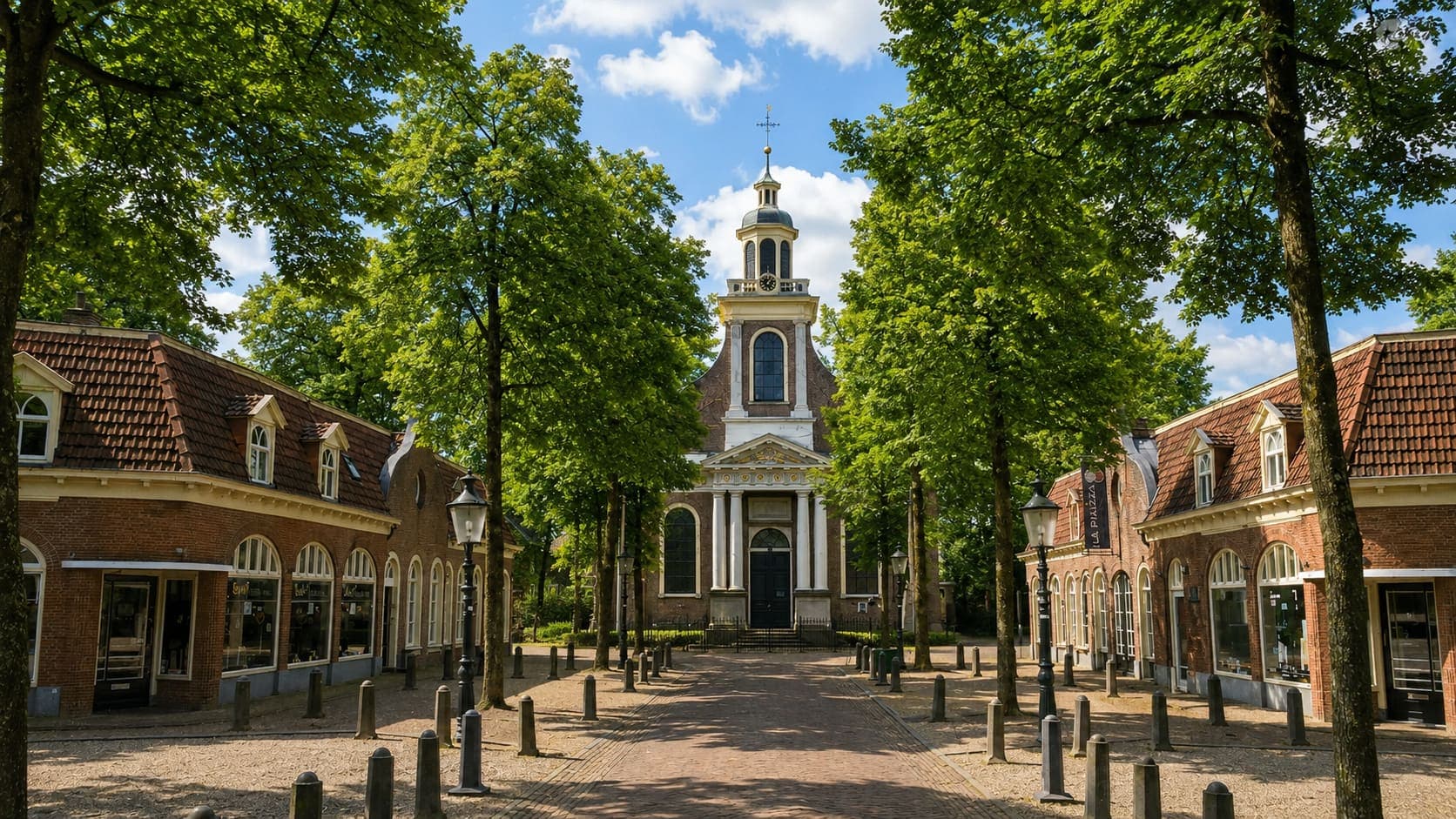
Driebergen and Rijsenburg were originally two villages and you can still see that in the buildings: around the old ribbons stand large detached houses with timber window frames, putty and glazing sealant around single glazing, often with tall windows that run up close to the gutter. In the post-war expansions around them there is terraced housing whose facade sealant is by now well past its first replacement round. Around the station there has been new building in recent years; there the sealant is young, but joints applied at handover are the first thing you see again after ten years or so.
What makes Driebergen different from the places in the river region is that the ground here works with you. On sand there is little movement for a joint to follow, so joints do not need to be extra wide, and that makes a difference to the look: a narrower joint looks calmer along a historic window frame. What does matter here is height and surface area. A villa easily has two to three times as many metres of sealing as a terraced house, and some of those are at four metres or higher.
Parking is seldom a problem here: most houses have their own driveway and we simply park on the property. What does play a part is height and planting. Many villas stand in a mature garden, and you cannot always get a mobile scaffold tower past an old beech hedge or over a gravel path. We check that at the site survey, so that on the day itself we are not standing there with a scaffold that cannot get through. With tall facades an aerial work platform is needed, and we say so in advance.
Fifteen kilometres by road, twenty minutes' drive. Close enough to come for one bathroom too, and the call-out fee is among the lowest we charge. For bigger jobs on a villa we schedule several consecutive days, because here it does not pay to drive back and forth each day with a scaffold that stays up.
What we do in Driebergen-Rijsenburg
- Bathroom, sanitary & kitchenSealing of sanitary ware, showers, baths, washbasins and kitchens.
- Window frames & glazingNeat, durable sealant work around window frames and glass.
- Facades & structural jointsFacade joints, connection joints and expansion joints in floors and walls.
- Swimming pool & wellnessSealant work in swimming pools, saunas, steam rooms and spas.
- Renovation & maintenanceSealant work during renovation, repairs and periodic maintenance.
- Specialist sealant workFor specific requirements and specialist applications.
You will hear from us within 15 minutes on working days, and the work comes with a 2-year guarantee.
The work here
What we do most often in Driebergen-Rijsenburg
Glazing of tall windows
The villas here have windows that run up close to the gutter, with glazing sealant that is often still original. It has hardened and is coming away, and at that height you only see it once the timber is already damaged. We take the old sealing out without damaging the glass and put back something that can move with timber and glass.
More about this serviceConnection joints at extensions
Many houses here have had something added later: a conservatory, an extension, a garage. The joint between old and new brickwork is where it goes wrong, because those two parts do not move in the same way. We measure how much difference is to be expected and derive the joint width from that, instead of copying the width that happened to be there already.
More about this serviceBathrooms and wellness
Houses like these more often have a second bathroom, a steam cabin or an indoor swimming pool, and that is different work from an ordinary shower room. High humidity and chemicals put more strain on a sanitary joint, so a different product goes in there. We first look at what the room does and only then choose the sealant.
More about this serviceHow we approach it here
Which sealant on what, and what it costs
The substrate decides the sealant
The flanks here are more often old timber than modern material, and that calls for patience. Painted timber means the sealant adheres to the paint layer and not to the timber: if that paint is loose, the sealant will later come away together with the paint, however neatly the joint was applied. That is why, if in doubt, we remove the paint back to sound timber, even though that takes time. Brickwork from the end of the nineteenth century is softer and more porous than modern work and sucks the adhesion out of a sealant that goes on without primer. In rebates around old glass something else applies again: there the timber has to be dry and sound, because no product adheres permanently to damaged timber and the edge comes back within a season. We decide what preparation is needed at the site survey.
Costs and lead time
The price follows from the number of metres, whether the old sealant has to come out and how easy it is to reach, and that last point weighs more heavily here than elsewhere. A villa easily has two to three times as many linear metres as a terraced house, and some of them are at height. If a mobile scaffold tower or aerial work platform is needed, that is in the amount and you hear about it in advance. Removing glazing sealant is slow work because the glass has to stay intact, so count on days rather than hours for that. An average bathroom is finished in half a day. You hear the amount before we start, call-out fee included, and curing is waiting time, not working time.
Two routes
Business or homeowner in Driebergen-Rijsenburg
For painting contractors doing maintenance here, this is work with many metres per address: large houses, many window frames, and a client who puts quality above speed. We work alongside a repainting cycle or do only the sealant work while you do the rest. If scaffolding is already up, that is the moment to include the sealant work: putting up the same scaffold twice costs more than the sealant work itself. You get videos of the finished work for each address.
For businesses
Contractors, painters, homeowners' associations, property managers and interior fit-out.
See what we do for businessesAlso near Driebergen-Rijsenburg
As the crow flies from the centre. By road it is further.
- Zeist 4 km
- Bunnik 6 km
- Odijk 5 km
- Den Dolder 7 km
- Wijk bij Duurstede 10 km
Is your town or city not listed? See the whole service area.
Questions from Driebergen-Rijsenburg
What people in Driebergen-Rijsenburg ask most often
Nothing sinks on sand, so why is my joint cracking?
Because settlement is not the only movement. Even without sinking ground a facade works: brickwork, timber and glass expand in the sun and shrink again at night, every day anew. A south-facing joint goes through that cycle thousands of times a year. When the sealant goes hard, it can no longer follow that stretch and it cracks, or it comes away from one flank. The fact that the ground here is stable makes a difference to the width, not to the need for maintenance.
Does my villa need scaffolding?
Above four metres or so, yes, and we say so in advance. Not only for safety reasons: from a ladder you cannot draw a clean joint, because you cannot run along the whole length in one movement. What we pay extra attention to here is whether a mobile scaffold tower can get through at all. Many houses stand in a mature garden with hedges, gravel paths and planting right up against the facade. We check that at the site survey instead of finding out on the day itself.
Do you also do indoor swimming pools and steam cabins?
Yes, and that really is different work from an ordinary bathroom. In a room with high humidity, heat and chemicals a sanitary joint is permanently under pressure, and an ordinary sanitary sealant does not last under that. A different product goes in there, with different requirements for the substrate and the curing time. We first look at what the room does, how often it is used and how it is ventilated, and only then choose the sealant.
My house dates from 1910. Is the sealant suspected of containing asbestos then?
The original putty from that time is not, but what went in later during maintenance is. Until 1994 asbestos was used in certain types of sealant, and a house a good hundred years old has had several rounds of maintenance in that century. So what is in it now is usually not the original. That is why we cut nothing out until it is established what is in it; the testing costs little and comes before the price for the work.
Can you come several days in a row?
With a larger house we prefer to, and it saves you money. Once scaffolding is up, you do not want to take it down halfway and put it up again later; that often costs more than the sealant work itself. That is why, with a villa, we schedule all the outside work in one block instead of separate days. At the site survey we say how many days we expect, so that you can plan for it and do not have to stay at home twice.

