
Utrecht · approx. 30 km from Utrecht
Sealant work in Baarn
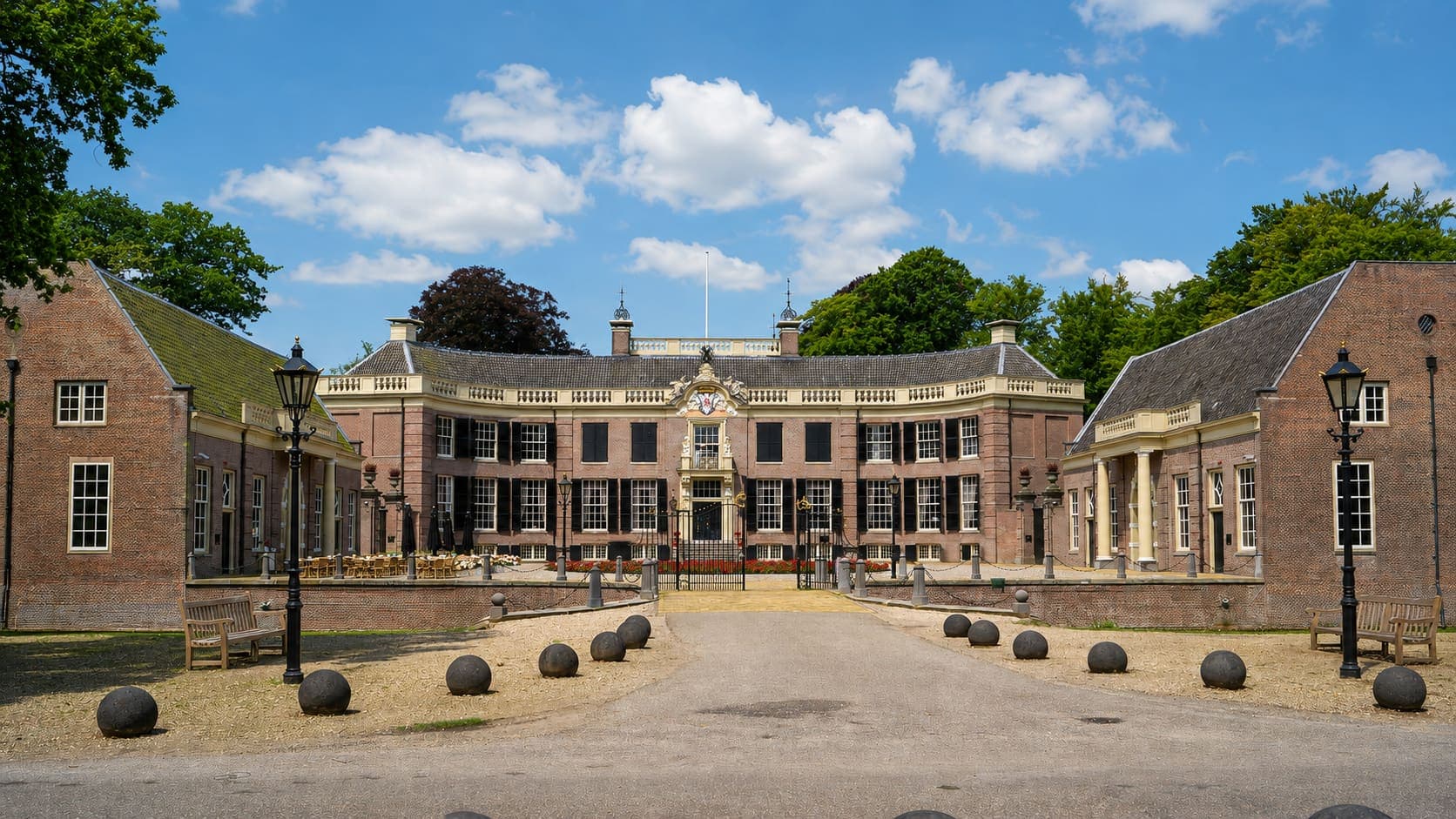
Baarn is a villa village on the sandy soils of the Heuvelrug. The ground is stable, so settlement hardly plays a part here. What does play a part is scale: the houses are large, the windows tall and the detailing rich. That gives two to three times as many linear metres of sealing per home as an average terraced house.
Since 1959
Experience and craftsmanship from Utrecht
Clear communication
Short lines, clear agreements
100% satisfaction
We only leave once you are satisfied
Lasting quality
Top-quality materials for a long-lasting result
What matters in Baarn
Large houses, tall windows
Nineteenth-century villas and country houses on spacious plots, a village centre with shops, and post-war residential neighbourhoods on the edges.
Around the old ribbons and in the villa neighbourhoods stand large detached houses with timber window frames, sash windows and glazing that runs up close to the gutter. With windows like that the sealing around the glass is often still original, and after decades it gives up along the whole length at once. Around the centre there are mixed buildings with shops on the ground floor and homes above, where the work is concentrated on the shopfronts. The post-war neighbourhoods on the edge were put up in rows and are past their first replacement round; there it is about work by the metre instead of bespoke work.
What sets Baarn apart is the relationship between height and accessibility. The facades are tall and the windows large, but the houses usually stand in a mature garden with paths, hedges and old trees. A mobile scaffold tower does not get through there as a matter of course. We check that at the site survey and then decide whether it can be done with a scaffold or whether an aerial work platform is needed, because that difference determines both the price and the number of days.
Parking is seldom a problem: most houses have a driveway and we simply park on the property. In the centre it is different, with a permit zone and limited space for a van. What we look at most at the site survey is the access route for equipment. Gravel paths, gates that are narrower than they look and planting right up against the facade determine whether a scaffold can be got into position at all.
Thirty kilometres by road, about half an hour. For bigger jobs on a villa we schedule several consecutive days, because a scaffold that stays up is cheaper than putting it up and taking it down twice. For smaller work we combine Baarn with Soest or Soesterberg, so that the drive is needed once for several addresses.
What we do in Baarn
- Bathroom, sanitary & kitchenSealing of sanitary ware, showers, baths, washbasins and kitchens.
- Window frames & glazingNeat, durable sealant work around window frames and glass.
- Facades & structural jointsFacade joints, connection joints and expansion joints in floors and walls.
- Swimming pool & wellnessSealant work in swimming pools, saunas, steam rooms and spas.
- Renovation & maintenanceSealant work during renovation, repairs and periodic maintenance.
- Specialist sealant workFor specific requirements and specialist applications.
You will hear from us within 15 minutes on working days, and the work comes with a 2-year guarantee.
The work here
What we do most often in Baarn
Sash windows and tall window frames
In old sash windows the glass sits in putty or in a glazing sealant that has hardened and is coming away at the edges. At height you only notice that once the timber in the sill is already damaged. We take the old sealing out without damaging the glass, check the rebate for a sound substrate and put back something that can move with it.
More about this serviceShopfronts in the centre
Shopfronts have large areas of glass and profiles that expand considerably in the sun. The sealing around them therefore moves every day and loses elasticity faster than a facade joint. There we choose a product for its stretch and its adhesion to the profile material, and work outside shop hours if necessary.
More about this serviceBathrooms and second wet rooms
Houses like these more often have more than one wet room, and the least used is usually the worst maintained. It is precisely in a guest bathroom that stands dry for weeks and is then used intensively that sealant falls apart faster. We replace the joint and check straight away whether the ventilation can keep up with the pace of use.
More about this serviceHow we approach it here
Which sealant on what, and what it costs
The substrate decides the sealant
The flanks here are predominantly old, painted timber, and that calls for more preparation than modern material. Sealant adheres to the paint layer and not to the timber underneath; if that layer comes away, the new joint comes off with it, however well it was applied. That is why we work back to sound material before anything goes in. In rebates around old glass the timber also has to be dry and intact; no product adheres permanently to damaged timber, and then the edge is loose again after one season. Nineteenth-century brickwork is softer and more porous than modern work and, without pre-treatment, draws the binder out of the sealant. What preparation is needed becomes clear during removal and not before.
Costs and lead time
The price follows from metres, height and accessibility, and the last two weigh more heavily here than elsewhere. If the work is above four metres, equipment is needed and that appears as a separate line in the quote so that you can see where the money goes. Removing glazing is slow work because the glass has to stay intact; count on days rather than hours for that. For a bathroom half a day is usually enough. With larger houses we give you a day-by-day schedule, so that you know when we are there and when the rooms can be used again.
Two routes
Business or homeowner in Baarn
For painting contractors doing maintenance here, this is work with many metres per address and clients who put finish above speed. If scaffolding is already up for the painting, that is the moment to include the sealant work; putting it up twice costs more than the sealant part itself. We work alongside the repainting cycle or take on only the sealing. For managers of mixed-use buildings in the centre we carry out the work outside opening hours.
For businesses
Contractors, painters, homeowners' associations, property managers and interior fit-out.
See what we do for businessesAlso near Baarn
As the crow flies from the centre. By road it is further.
- Soest 4 km
- Hilversum 7 km
- Soesterberg 8 km
- Amersfoort 10 km
- Maartensdijk 12 km
Is your town or city not listed? See the whole service area.
Questions from Baarn
What people in Baarn ask most often
Can a scaffold get through my garden to the rear facade?
That is exactly what we check at the site survey, because it determines the approach and the price. A mobile scaffold tower needs a level, sufficiently wide route, and older gardens often do not have one: gravel paths give way, gates are narrower than they look and planting often stands right up against the facade. If a scaffold cannot get through, it becomes an aerial work platform or we work in sections. Each costs differently, and you hear that in advance.
Why does glazing cost more than ordinary facade sealant work?
Because of the removal. With a facade joint you cut along two stone flanks and can work at a steady pace. With glazing the old sealing sits against the glass, and that glass has to stay intact, especially with old panes that cannot simply be replaced. That means working more slowly, more work by hand and checking more often whether the rebate underneath is still intact. The material is not more expensive; the time is.
My guest bathroom is hardly ever used. Mould all the same?
That is not an exception but a familiar pattern. A room that stands dry for weeks and is then used intensively for a weekend gets a peak in humidity without being ventilated in any structured way. Moisture condenses, stays put and soaks into the sealant. Replacing solves it for that moment, but without ventilation it comes back. That is why at the site survey we also take a look at the extraction and say so if it falls short.
Do you also work on shopfronts in the centre?
Yes, and usually outside opening hours. Shopfronts have large areas of glass in profiles that expand considerably in the sun, so the sealing around them moves every day and wears faster than an ordinary facade joint. There we choose a product for its stretch and its adhesion to the profile. The work itself takes little time per metre; the scheduling is the hassle, and that is why we agree it in advance with the business owner or the manager.
How many days does a large house take?
We say that at the site survey, because guessing helps nobody. What determines it is the number of linear metres, how many of them are at height and whether the equipment can stay in place. With a villa with many old window frames you are soon talking about several consecutive days. We prefer to schedule them back to back rather than spread out: a scaffold that stays up is cheaper than putting it up twice, and you do not have to be at home on four separate occasions.

