
Zuid-Holland · approx. 65 km from Utrecht
Sealant work in The Hague
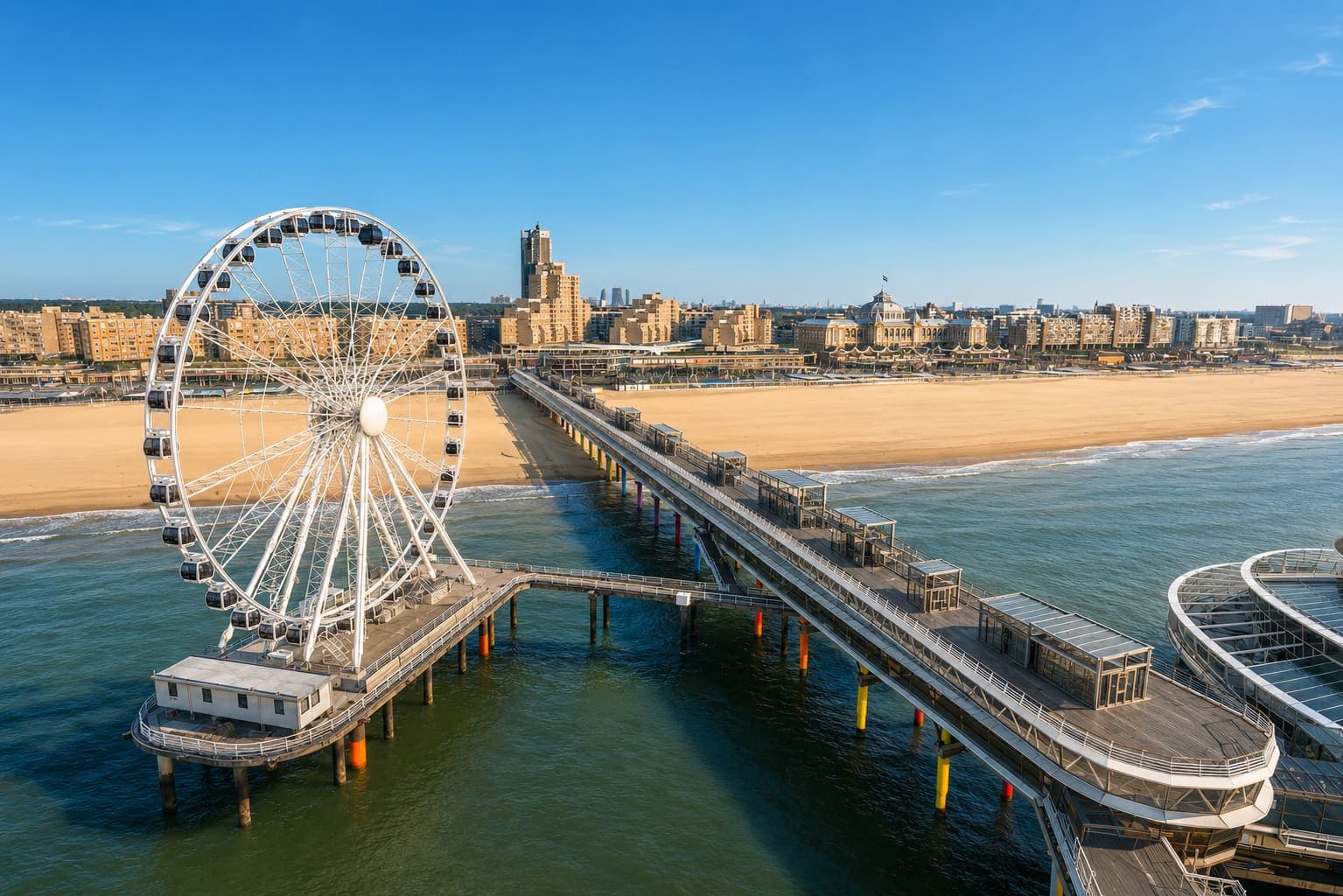
In The Hague the buildings in some places stand right by the sea. From the boulevard to Leidschenveen is ten kilometres, and over those ten kilometres what a sealant joint has to withstand changes. We match the choice of sealant and the maintenance rhythm to that.
Since 1959
Experience and craftsmanship from Utrecht
Clear communication
Short lines, clear agreements
100% satisfaction
We only leave once you are satisfied
Lasting quality
Top-quality materials for a long-lasting result
What matters in The Hague
Salt blows kilometres inland
A lot of multi-storey housing: pre-war flats with timber window frames, walk-up flats from the post-war reconstruction, Vinex districts on the east side and office buildings in the centre.
The Statenkwartier, Duinoord and the Archipelbuurt are pre-war town houses: timber window frames and bluestone sills. Scheveningen and Duindorp are in the front row, and there the facade is the work. Moerwijk, Morgenstond and Bouwlust in Escamp are the post-war reconstruction of Zuidwest, built between 1949 and the sixties. They are walk-up flats with small, fully tiled bathrooms that come up for work a block at a time. Ypenburg and Leidschenveen are Vinex districts with plastic window frames. Plastic expands roughly seven times as much per degree as concrete, so it is at that connection joint that the most movement occurs.
Within one municipality you have two climates here. By the sea, salt settles on the facade and UV breaks down the surface of the sealant; it becomes chalky, loses its stretch and cracks on the first cold night. Ten kilometres inland the same sealant from the same cartridge lasts years longer. That is why we first look at where in the city the building stands and which way the facade faces.
In the centre a zero-emission zone for vans has applied since 1 January 2025: within the Centrumring, plus the Telderstracé and the S103. Since 1 January 2026 part of the coastal area has come under it as well. If your address lies within it, put that in your request: then we know in advance where the van may and may not go. In the Schilderswijk and in the old village of Scheveningen the streets are narrow and full; there we start early. In many streets there is only paid parking, and that determines how close the materials get to the front door.
From Utrecht it is 65 kilometres by road, a good hour if the A12 cooperates and considerably more if it does not. That drive counts in the planning, so it helps if we know in advance how much there is to do. If you know of more than one address, for example two bathrooms, a block or a street, name them in one request.
What we do in The Hague
- Bathroom, sanitary & kitchenSealing of sanitary ware, showers, baths, washbasins and kitchens.
- Window frames & glazingNeat, durable sealant work around window frames and glass.
- Facades & structural jointsFacade joints, connection joints and expansion joints in floors and walls.
- Swimming pool & wellnessSealant work in swimming pools, saunas, steam rooms and spas.
- Renovation & maintenanceSealant work during renovation, repairs and periodic maintenance.
- Specialist sealant workFor specific requirements and specialist applications.
You will hear from us within 15 minutes on working days, and the work comes with a 2-year guarantee.
The work here
What we do most often in The Hague
Facade joints on the seaward side
On the west and south-west facades the sealant has the hardest time. We measure the joint before we fill it: the width follows from the movement the building components make, not from what the eye wants. And a closed-cell PE backing rod goes in behind, so that the sealant adheres on two sides and not on three.
More about this serviceWet rooms in walk-up flats
In the walk-up flats the bathrooms are small, fully tiled and not well ventilated. Acrylic does not belong there: it disperses under prolonged exposure to water. Silicone or a hybrid with fungicide goes in, at least 8 mm wide and 6 mm deep, with a closed-cell PE backing rod behind it: open-cell soaks up water and you do not want that in a wet room.
More about this serviceOld glazing sealant in window frames
In the pre-war districts, timber and steel window frames still often hold the original glazing sealant or putty. From before 1994 it is suspected of containing asbestos, risk class 2, and then no knife of ours goes in until it is established what is in it. With replaced window frames we watch the drainage slot in the bottom rail: sealant that runs over it wrecks the insulating glass in time.
More about this serviceHow we approach it here
Which sealant on what, and what it costs
The substrate decides the sealant
Which sealant goes in is determined by the substrate, and that changes here from district to district. Bluestone: sills and skirting boards in the Statenkwartier and the Archipelbuurt. No acetoxy silicone may go on those, and no sealant with free plasticisers: they migrate into the pores and give a dark edge that never comes out again. So on stone it has to be a natural stone sealant whose plasticisers are chemically bound. Glazed tiling in the flat bathrooms: smooth and dense, so the adhesion comes from a grease-free flank. Painted timber on the window frames: if paint has to go over it, it becomes acrylic or a paintable hybrid, because silicone will not take paint. And concrete in the new build: that is alkaline, so there too acetoxy is out. The standard is OTTOSEAL S 125; which type goes in, we choose based on the substrate.
Costs and lead time
Block work is the rule rather than the exception here, and you notice that in the price. It is per linear metre, with a sliding scale based on the size of the job: if all the bathrooms of one walk-up block in Moerwijk are done one after the other, or the window frame connections of a whole housing block in the Statenkwartier, the metre works out lower than for one single joint in one home. We do not put amounts here yet, because the rates have not yet been fixed. On the seaward side it is almost always replacement and not new, and that is the more expensive of the two: the old sealant has to come out completely first, and that takes more time than the sealing itself. With a bathroom it is mainly the waiting time afterwards that counts. Sealant cures at roughly 2 to 3 mm per day and a sanitary joint is 6 mm deep, so allow for two days without showering. In a walk-up flat with one bathroom that is not a detail but a schedule: you hear in advance which two days it will be, and a manager having a whole block done can tell the residents what to expect. If you outsource the joint work as a painter or contractor, the VAT is reverse charged. The 2-year guarantee on our work applies just as long in Duindorp as in Leidschenveen. It covers what we do: adhesion, build-up and workmanship. What salt and UV do to the surface of the sealant afterwards falls outside it, and so does the movement of the building itself: settlement, deflection, or a joint that moves more than the sealant can cope with. That is why we measure in advance how much movement there is at the joint, so that it is not laid too narrow. If that measurement is not right, you hear that before the work and not afterwards. Send the metres and the facade side with your request, and you have a reply within 15 minutes on working days.
Two routes
Business or homeowner in The Hague
The Hague is a city of managers. A lot of multi-storey housing means a lot of homeowners' associations (VvE), and in Zuidwest there is housing association stock that comes up for work a block at a time. If you are a property manager for a homeowners' association (VvE) or work for a housing association, you can place that work with us as subcontracting: one work description, a price per linear metre and handover with a video report. If you are a painter and the joint work normally goes out of the door during a facade repaint, you can place that part with us separately, most conveniently while the scaffolding is still up. In the centre and on the Binckhorst it is about office buildings: connection joints along powder-coated aluminium and expansion joints in concrete.
For businesses
Contractors, painters, homeowners' associations, property managers and interior fit-out.
See what we do for businessesAlso near The Hague
As the crow flies from the centre. By road it is further.
- Rijswijk 5 km
- Voorburg 5 km
- Leidschendam 10 km
- Delft 9 km
- Wassenaar 9 km
- Naaldwijk 10 km
- Zoetermeer 14 km
Is your town or city not listed? See the whole service area.
Questions from The Hague
What people in The Hague ask most often
Why is my sealant in Duindorp worn out sooner than my sister's in Leidschenveen?
Salt and UV. By the sea, sea salt settles on the facade and UV breaks down the surface of the sealant. It becomes chalky and hard, loses its stretch and then cracks at the first sharp change in temperature. Inland the same sealant does not have to withstand that. You also see the difference on the sheltered side of the same house, by the way: the north facade holds out longer than the west and south-west facades.
My house from the thirties still has the old sealant around the panes. Can it just come out?
Not just like that. If that sealant has been there since before 1994, it is suspected of containing asbestos and cutting it out falls under risk class 2. It is precisely the cutting that produces dust, and that is exactly what you do not want. The order of steps is fixed and we follow it: have it established what is in it, report it, and have the removal done by a licensed company. Only after that does the new sealing go in. In the pre-war districts whole blocks stand from the same building years with the same window frames, so what applies to one window usually applies to the whole house.
On the bluestone sill of our town house in the Archipelbuurt the edge along the sealant has turned dark. Will it still come out?
No. That is edge-zone staining and you cannot get it out any more. Free plasticisers and silicone oil migrate into the pores of the stone; often you only see it weeks later. Scrubbing changes nothing, and with an aggressive cleaner you only make the stone more open. Preventing it is possible: natural stone sealant with chemically bound plasticisers, and never acetoxy silicone on bluestone. That is why we always ask exactly what the sealant will be sitting on.
We are a homeowners' association (VvE) with a walk-up flat in Morgenstond. In which months can the facade joints best be assessed?
In the cold season. Then the building components have contracted and the joint is open at its widest, exactly the moment when you can see whether it is still adhering. Note the difference: if the sealant comes away along the flank, the problem is in the adhesion or the preparation. If it cracks in the middle, the joint was designed too narrow and refilling is pointless; it has to be wider. Elastic sealant works between 8 and 30 mm.
My bathroom in Ypenburg dates from 2000 and the sealant is turning black anyway.
Look at the ventilation first. For a new bathroom the requirement is 14 dm³/s of extraction; if the mechanical extraction is no longer working at its rated level, the wall stays wet and mould grows on any sealant. Do not scrub it away with bleach: that washes the anti-mould agent out of the sealant and makes the edge porous, so after that it goes faster. We replace the joint, but we tell you if the air is the cause.

